
Effective civil injunction work starts before the hearing. In England and Wales, barrister representation for civil injunctions can include advice, drafting and court advocacy, including before proceedings begin. A directly instructed barrister can help shape your case, but you remain responsible for organising documents, writing letters and handling tasks normally carried out by a solicitor.
It’s understandable to want clear advice when an injunction could affect your business, work or personal life. The right preparation depends on what the application seeks, the evidence available and whether you’re applying for an order or responding to one. This article explains what a barrister can do in civil claims and High Court injunction matters, how advice and advocacy fit together, and what to consider when arranging representation. It also explains how direct access works, including the responsibilities you take on and when a case may need additional legal support.
Key Takeaways
- Direct access can provide advice and court representation, but you’ll need to organise documents and handle tasks usually carried out by a solicitor.
- Prepare evidence and define the conduct or requirements you want the injunction to address; the court assesses the case against the relevant legal test.
- For High Court disputes, clear drafting and focused advocacy can help employers and individuals present their position and respond to urgent applications.
- Breaching a civil injunction can lead to imprisonment for a maximum of 2 years, according to UK Parliament, so understand the order and comply with its terms.
Direct access barrister advice and court representation
Direct access can cover advice, drafting and court representation at different stages of civil litigation, including before proceedings begin. The right instruction depends on the work involved and who will manage each practical task.
Suitability and eligibility for direct access
Public Access, also called Direct Access, allows individuals and businesses to approach a barrister directly. You can instruct a barrister who accepts Public Access work if the instruction is suitable for that arrangement. For an injunction, consider whether you need advice, help preparing documents, representation at a hearing, or a combination of these.
There isn’t a separate client-category test described here. The practical question is whether the barrister can take on the required work directly. Before instructing, outline the dispute, the order sought or opposed, and any upcoming court hearing. This helps the barrister assess the instruction and explain what you’ll need to manage.
Direct access representation and its risks
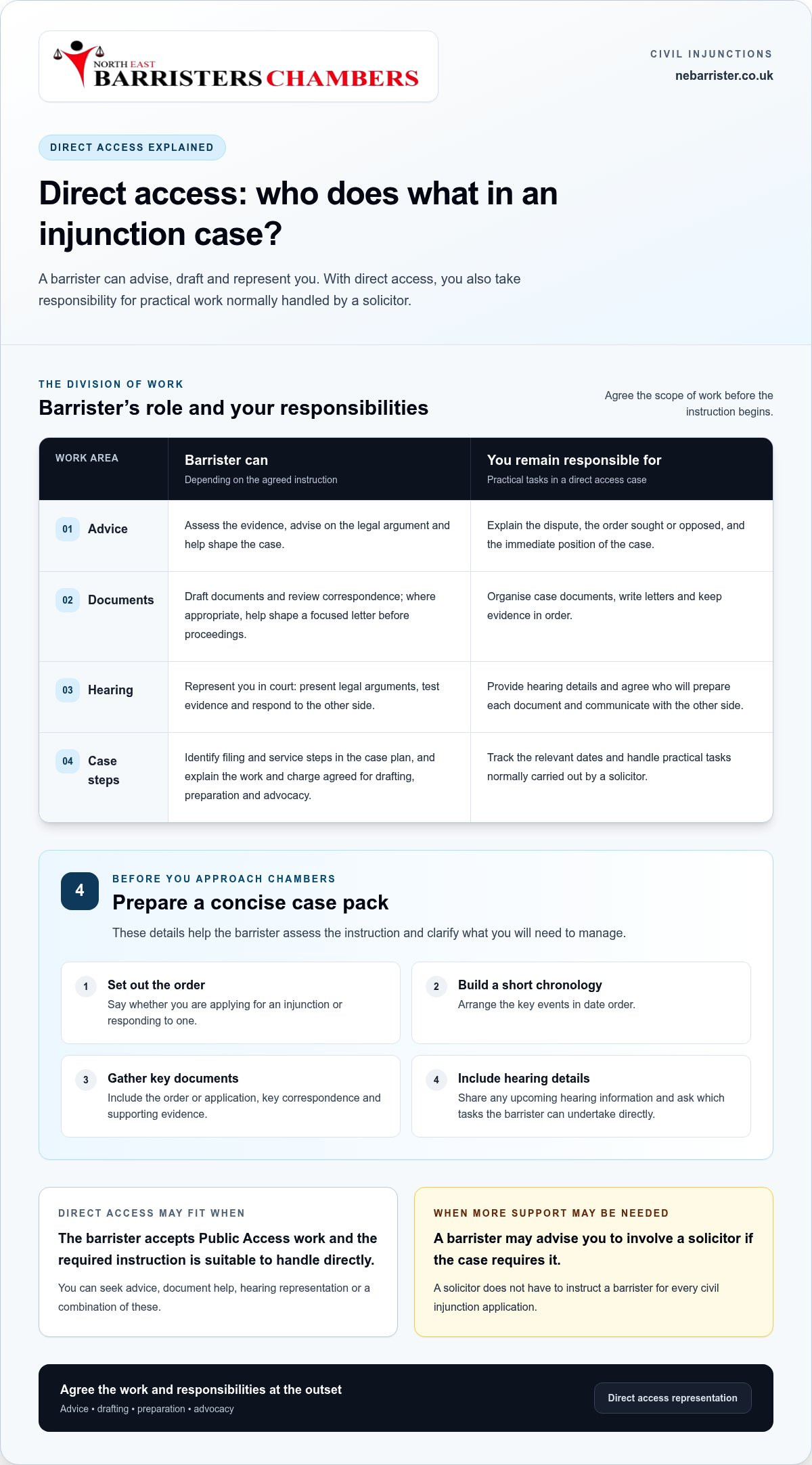
A direct access barrister can advise and represent you, but you remain responsible for tasks a solicitor would ordinarily handle. These may include organising case documents, writing letters and keeping evidence in order. Make a clear list of who will prepare each document and communicate with the other side.
A solicitor does not have to instruct a barrister for every civil injunction application. Direct instruction is an option, but a barrister may advise you to seek a solicitor’s assistance if the case requires it. Representing yourself or managing an incomplete case file can make it harder to present evidence and meet court directions. According to UK Parliament, a person who breaches a civil injunction in England and Wales can be committed to prison for a maximum of 2 years.
Finding a civil injunction barrister
When choosing a barrister, look for relevant civil injunction experience and check whether they accept Public Access instructions. The court’s location can matter for hearings, but consider the work required too: advice, drafting, preparation and advocacy may all be needed. For barrister representation for civil injunctions, explain whether you’re applying for an order or responding to one.
Prepare a short chronology, the order or application, key correspondence and hearing details. Send these materials to the chambers you choose and ask which tasks the barrister can undertake directly. This helps clarify the division of work before the instruction begins.
Advice, drafting and advocacy in civil claims
A civil barrister can assess the evidence, advise on the legal argument, draft documents and represent you in court. Civil legal aid rules apply when the court decides whether to make an injunction; criminal legal aid applies to proceedings alleging a breach.
Pre-action advice and springboard injunctions
Before issuing a claim, ask for advice on the evidence, likely arguments and practical outcome you need. A barrister can review correspondence and help shape a focused letter before proceedings, where appropriate. For an anti-social behaviour injunction, UK Parliament says the court may grant an order if the defendant has engaged in, or threatened, anti-social behaviour and an injunction is just and convenient to prevent similar behaviour.
A springboard injunction may be sought to address an alleged unfair advantage and preserve the position while a claim proceeds. The evidence should identify the conduct, the resulting advantage alleged and the proposed limits of the order. A barrister can advise on the draft and whether the evidence supports the relief requested.
Application steps and deadlines
There is no single deadline for every civil injunction application. Timing depends on the claim, the evidence and the urgency of the alleged conduct. Start by gathering relevant documents, preparing a dated chronology, identifying the order sought and explaining why it is needed. Then get advice on the appropriate application and court process.
For an urgent application, explain why it is urgent and organise supporting evidence so the court can assess it. The court’s directions and hearing timetable determine the dates you must meet. Ask the barrister to identify each filing and service step in the case plan, then add those dates to your diary.
At the hearing, a barrister can present the legal argument, test evidence and respond to the other side. Before instruction, agree the work and charge, including drafting, preparation and advocacy. Clerks can help route an enquiry to suitable members of chambers; provide a concise portfolio of key documents and your hearing details. A barrister may also advise that a solicitor’s involvement is needed. For advice on civil injunction representation, set out the order sought and the immediate procedural position.
High Court injunctions for employers and individuals
Employers and individuals may seek an injunction to prevent specific conduct or protect a legal position. Before proceedings begin, negotiation can clarify what is disputed and whether agreed undertakings could avoid a hearing. Keep proposals precise: identify the conduct, the evidence supporting your position and the protection sought. For an urgent application, explain why waiting for ordinary proceedings would undermine that protection.
The appropriate court depends on the claim and the order sought. Civil injunctions are generally made in the county court, rather than the magistrates’ or crown court, although some disputes proceed in the High Court. A barrister can assess the appropriate forum and prepare advocacy for the hearing. For anti-social behaviour cases, UK Parliament says the court decides whether the behaviour is proved on the balance of probabilities.
Evidence needs careful organisation. Civil injunction proceedings can use hearsay, including evidence from anonymous witnesses, so explain the source and context of each account. Build a chronology, preserve relevant messages and documents, and identify gaps or conflicting versions. A barrister can help distinguish direct evidence from reported information, address credibility issues and present the material clearly to the judge.
The court can make an injunction without telling the defendant about the application beforehand. If an order is made without notice, the defendant should obey it until the return-date hearing, when the court can consider further arguments. Prompt advice is important for both applicants and respondents. Identify the terms, hearing date and any alleged breaches, then prepare a focused response or application.
High Court advocacy may involve testing whether the evidence supports the precise restrictions requested, negotiating narrower terms and addressing the consequences of alleged breaches. Employers should organise relevant policies, correspondence and witness accounts; individuals should preserve messages and note key events. To instruct a barrister, contact our clerks with details of the court, current proceedings and any urgent hearing. Clear information helps us understand the work needed for effective representation.
Civil barristers’ advocacy, drafting and advisory services
Effective civil advocacy starts with a clear objective. Set out what you need the court to prevent or require, then match each point to supporting evidence. A barrister can assess the legal issues, identify weaknesses in the other side’s case and advise whether an application fits the dispute. For example, an application to stop repeated contact needs specific incidents, dates and relevant messages, not broad allegations.
Drafting turns that analysis into documents the court can use. A barrister can prepare or review written submissions, witness statements and the wording of proposed orders. Each restriction should be precise enough for the respondent to understand and the court to enforce. Separate facts from opinions, arrange exhibits in date order and explain how each document supports the application. Label files before you download or add them to your working bundle.
Preparation also shapes the hearing. The barrister can identify the points to address, prepare questions about disputed evidence and make focused submissions. Public statements, emails and internal records may each need different context. If the issue belongs in a tribunal rather than a civil court, the correct forum and available remedy affect the advice and drafting required. Clarify the forum before building your case around a particular application.
To make the instruction practical, provide a concise chronology, the current order or draft application, key correspondence and your desired outcome. Identify any hearing date and explain what remains disputed. The barrister can then define the work, such as advice only, drafting, or preparation and advocacy. That scope helps you organise your own tasks and understand how each stage fits together. For focused advice on civil drafting and representation, instruct a civil barrister with your case documents and objectives.
North East Barristers Chambers: Direct Access Barrister Services
North East Barristers Chambers provides direct access barrister services and court representation in civil law for individuals and businesses across the UK. Turn to us for advice on a civil injunction, help preparing your case or advocacy in court.
To make an enquiry useful, explain whether you’re applying for an injunction or responding to one. Include the current order or application, key evidence, hearing details and the outcome you’re seeking. This gives the barrister a clear starting point for considering the work involved and next steps.
For direct access advice or court representation, contact North East Barristers Chambers.
Make your next move with a clear plan
Before taking action, write down the decision you need to make: whether to seek an order, respond to an application or prepare for a hearing. Barrister representation for civil injunctions is a practical option when you need legal advice or advocacy focused on that decision. Gather the documents that explain your position and note what you need the court to address. A clear brief helps turn a complex dispute into specific questions for legal advice.
North East Barristers Chambers offers Direct Access Barrister Services and Court Representation, and also practises in Criminal law. To discuss your civil matter, contact North East Barristers Chambers with a concise outline of the issue and the next step you’re considering. You can begin with the information you have and organise further details as your case progresses. A considered first step can make the way forward clearer.
Frequently Asked Questions
Can a barrister represent someone directly in a civil injunction case in England and Wales?
Yes. In England and Wales, barrister representation for civil injunctions can be arranged through Public Access if the barrister accepts the instruction and considers direct work suitable. A barrister may advise and represent you before proceedings begin or later in the case. You remain responsible for case administration, so agree who will prepare and file each document, manage correspondence and organise evidence.
What types of civil injunctions can a barrister advise on or represent clients for?
Barristers can advise on civil injunction applications based on different legal grounds, including anti-social behaviour, harassment and threatened conduct. An order may prohibit specified behaviour or require a person to take defined steps. For example, an employer may seek restrictions to protect its position in a dispute. The legal basis, evidence and remedy sought shape the advice and advocacy needed.
What evidence and documents are needed for a civil injunction hearing?
Prepare the application or existing order, a clear chronology, relevant correspondence, witness accounts and documents supporting each disputed event. For example, preserve original messages and note who created or received them. Civil injunction proceedings can also use hearsay, including anonymous witness evidence. Explain the source of each account and distinguish what you witnessed personally from information reported by someone else.