
Yes. In England and Wales, a barrister can negotiate on your behalf in a Public Access matter, including settlement terms. In a criminal case, a directly instructed barrister can advise you on plea bargaining and represent you in court. Direct instruction does not mean the barrister takes over every part of managing your case.
It is reasonable to want one clear point of contact, especially when a legal matter feels unfamiliar. But advocacy and case administration are different: a barrister can advise, negotiate and present your case, while you may remain responsible for tasks such as managing documents and communicating with the other side.
This article explains when you can instruct a criminal barrister directly, what advice and representation can cover, and where the limits lie. It also explains the difference between a barrister’s role in negotiations and in court, so you can decide what support fits your situation.
Key Takeaways
- In England and Wales, you can instruct an appropriately authorised barrister directly for legal advice and representation without first going through a solicitor.
- A barrister can negotiate settlement terms or advise on plea bargaining, depending on the type of case.
- Direct instruction does not usually mean the barrister manages every part of your case; you may still need to handle documents and communication yourself.
- Consider whether you need focused advice or representation at a hearing, or broader support with case management.
Can I instruct a criminal barrister direct?
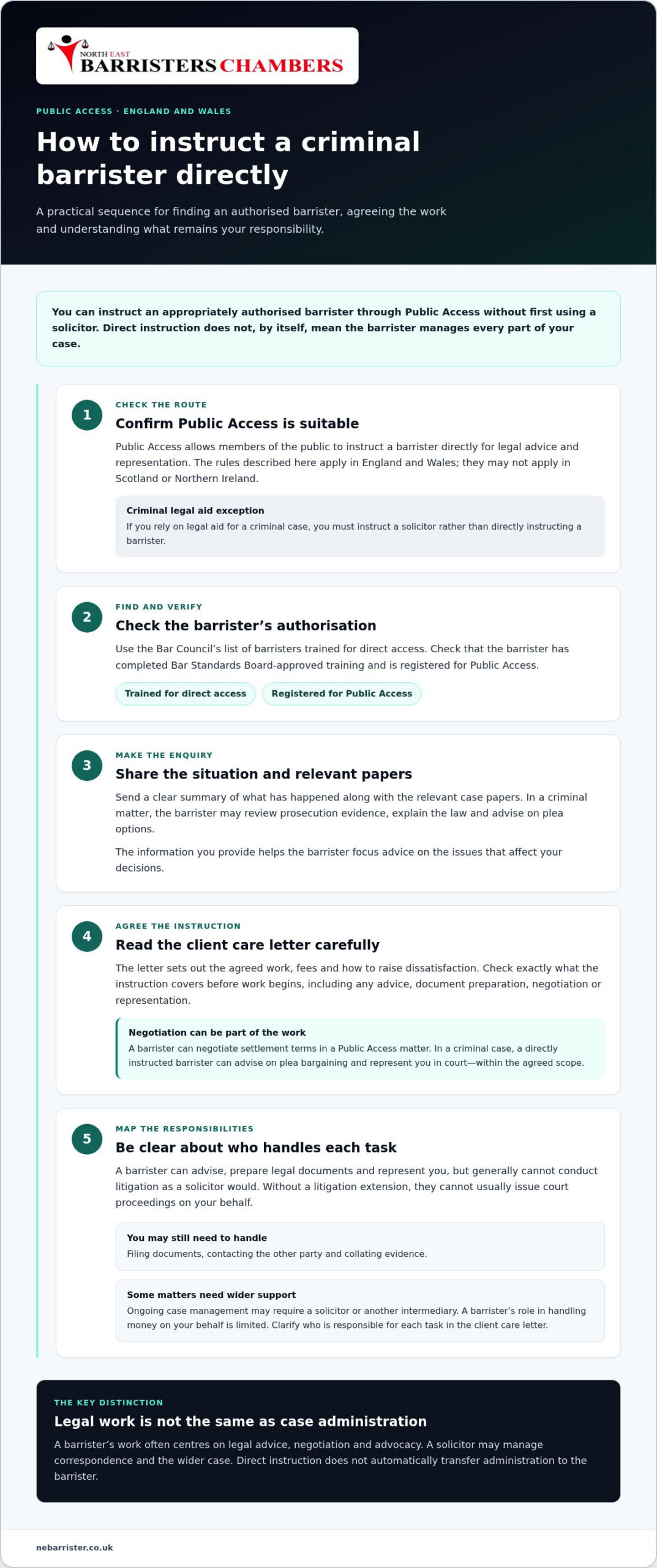
Yes. In England and Wales, you can instruct a suitably authorised barrister directly through Public Access, without first using a solicitor. A barrister can advise on a criminal case, including plea bargaining, and represent you in court.
Finding and checking a Public Access barrister
Public Access lets members of the public instruct a barrister directly for advice and representation. To find one, use the Bar Council’s list of barristers trained for direct access, then check that the barrister has completed Bar Standards Board-approved training and is registered for Public Access.
When you enquire, send a clear summary of your situation and the relevant case papers. The barrister’s client care letter sets out the agreed work, fees and how to raise dissatisfaction. Read it carefully so you understand what the instruction covers before work begins. These rules apply to England and Wales, not necessarily Scotland or Northern Ireland.
Limits on a Direct Access barrister’s role
A Direct Access barrister can advise, prepare legal documents and represent you, but generally cannot conduct litigation as a solicitor would. For example, a barrister without a litigation extension cannot usually issue court proceedings on your behalf.
You remain responsible for tasks such as filing documents, contacting the other party and collating evidence. A barrister’s role in handling money on your behalf is limited. Some cases need a solicitor or another intermediary, particularly when ongoing case management is required. Clarify who will handle each task in your client care letter.
Barrister and solicitor negotiation roles
A barrister can negotiate settlement terms in a Public Access matter and advise you on the legal strengths of your position. In a criminal case, a directly instructed barrister can advise on plea bargaining and represent you in court.
A solicitor’s role can include managing correspondence and the wider case, while a barrister’s work often focuses on legal advice, negotiation and advocacy. So, can a barrister negotiate on your behalf? Yes, but direct instruction does not automatically transfer case administration to them. For criminal cases, anyone relying on legal aid must instruct a solicitor rather than directly instructing a barrister.
Barrister advice and representation
A barrister can assess the legal merits of your case and explain realistic outcomes. In criminal proceedings, this may include interpreting the law, reviewing prosecution evidence and advising on plea options. Provide the relevant papers and a clear account of events so the advice addresses the issues that affect your decisions.
For negotiations, a barrister can explain your position, identify points to raise and negotiate settlement terms in a Public Access matter. In a criminal case, they can advise on plea bargaining and represent you in court. If you are asking whether a barrister can negotiate on your behalf, the answer is yes, within the agreed scope of work.
Representation can extend beyond a court hearing. A barrister may represent you in a tribunal or mediation, and may attend employment, police or investigative hearings where appropriate. The setting and purpose shape the preparation: a court appearance may require a focused argument, while mediation centres on resolving a dispute.
Before a hearing, a barrister can help you prepare, explain what evidence matters and draft documents such as a position statement or witness statement based on the information you provide. They can advise on choosing an expert witness and, where their authority permits, instruct that expert. This work helps turn the facts and evidence into a clear case.
Barristers and solicitors are both qualified lawyers, but their roles can differ. A barrister often focuses on legal analysis, negotiation and advocacy, while a solicitor may handle ongoing correspondence and case administration. The circumstances of your matter determine whether you need focused representation or broader support. For advice and advocacy through Direct Access Barrister Services, consider the work your case requires and the issues you need addressed.
Barristers’ advisory and advocacy work
A barrister’s work can combine legal advice with advocacy, which means presenting a case orally or in writing. They can advise on your legal rights, formal steps in proceedings and the strength of your position. A written opinion can set out the merits of your case and realistic outcomes to consider before you decide what to do.
Preparation starts with the material you provide. A barrister can review documents, assess the evidence and explain what may matter at a hearing. They can help you prepare for questions and draft formal documents, including a position statement, defence or skeleton argument. A witness statement can also be prepared from information you give, so check that it accurately reflects your evidence.
At a hearing, advocacy means presenting the relevant arguments clearly and responding to the court’s questions. A barrister may appear for you, make oral submissions and cross-examine witnesses. If a judge asks a question that requires your factual instructions, your barrister can take them during the hearing and respond on your behalf.
The work may involve advice on a particular legal issue or representation at a specific hearing, rather than support throughout the whole case. For example, you may need help understanding a procedural step or presenting your strongest points at a hearing. The barrister’s role depends on the agreed instructions and the rules governing their work.
There are limits to advocacy and preparation. A barrister representing you cannot investigate your case or approach potential witnesses to find helpful evidence. You must provide the documents needed to prepare, and Public Access arrangements can leave you responsible for case administration. Barristers, including those accepting Public Access instructions, must follow the Bar Standards Board’s rules. These boundaries clarify what the advice and representation cover, and which practical tasks remain yours.
What types of cases can Public Access barristers handle, and what are the exceptions?
In England and Wales, Public Access can cover legal advice, document drafting and representation in court, tribunals or mediations. It can suit a focused matter, such as advice on a legal issue or representation at a particular hearing. The scheme is intended for straightforward cases, rather than complex matters that need ongoing case management.
In criminal cases, a directly instructed barrister can advise on the law, evidence, case preparation and sentencing. They can also advise on plea bargaining and represent you in court. In civil and family matters, a barrister may advise on your position, draft documents and represent you at a hearing. Public Access barristers can also represent clients in employment tribunals and mediations.
The key distinction is between advocacy and litigation. A Public Access barrister generally cannot manage your case as a solicitor would or issue court proceedings without a litigation extension. You remain responsible for practical steps such as filing documents, collecting evidence and communicating with the other side. A barrister may help draft correspondence, but cannot conduct litigation without the required authority.
Some situations call for a solicitor or another intermediary. This may include a complex case requiring ongoing administration, witness contact or correspondence with other parties. A barrister instructed to appear in court cannot investigate the case or approach potential witnesses to find evidence. Consider all the work your case needs, not only the hearing itself.
Legal aid is a significant exception in criminal cases. If you rely on legal aid, you cannot directly instruct a criminal barrister; a solicitor must instruct the barrister. If police arrest you and question you under caution, you are entitled to free legal advice. For privately instructed advice or representation in criminal, civil or family proceedings, explore Direct Access barrister support.
North East Barristers Chambers: Direct Access Barrister Services
North East Barristers Chambers provides Direct Access Barrister Services for people seeking focused legal advice or representation without first instructing a solicitor. If you need a barrister to assess a criminal or civil matter, prepare for a hearing or present your case in court, Direct Access can provide focused advocacy support.
The right next step depends on what your case needs. Direct Access may suit a specific hearing or legal issue; a matter requiring ongoing case management may call for additional support. North East Barristers Chambers provides Court Representation in criminal and civil law, giving you access to barrister advocacy for your proceedings.
To discuss your circumstances, contact North East Barristers Chambers.
Decide what support you need next
If you are weighing whether a barrister can negotiate on your behalf, start by defining the outcome you want and the decision you need help with. Is your priority to discuss settlement, prepare for a hearing or understand your legal options before responding? A clear objective helps frame the instruction and focus the work on what matters to you.
Before making contact, gather the key documents and write a brief timeline of events. Note any deadlines, discussions already held and questions you need answered. Then explain whether you are seeking advice, negotiation support or representation, and discuss how the proposed work fits your circumstances. Clear instructions make it easier to establish the scope of the work and your responsibilities.
For a practical conversation about your situation and the legal support you need, contact North East Barristers Chambers. Taking that first step can help you approach the next decision with greater clarity.
Frequently Asked Questions
Where can I find a Public Access barrister?
Use the Bar Council’s list of barristers trained for direct access, then look for someone whose practice matches your legal issue. For example, identify whether you need criminal advice, help with a civil dispute or representation at a hearing. Before instructing them, establish what work you need, which documents they require and which tasks you will manage yourself.
Are there any restrictions on what a barrister can do for me?
Yes. A Public Access barrister can advise and represent you, but generally cannot take over litigation and case administration like a solicitor. For example, you may need to file court papers, pay court fees, gather evidence and communicate with the other side. A barrister without a litigation extension cannot usually issue proceedings for you.
How does the process work?
You explain your situation and provide the documents relevant to your case. The barrister considers the issues and sets out the agreed work in a client care letter, including fees and how to raise dissatisfaction. The letter should also clarify when the barrister may or must stop acting. Under Public Access, keep track of filing dates and court fees, which remain your responsibility.
What is the Direct Access Scheme?
The Direct Access Scheme lets members of the public instruct an authorised barrister without first using a solicitor. The Bar Standards Board introduced the scheme in 2004 and significantly expanded it in 2013. It enables direct instructions for legal advice, document drafting and representation. The precise work depends on the barrister’s authorisation and the tasks agreed for your matter.
Can a barrister in England and Wales negotiate on a client’s behalf?
Yes. A barrister can negotiate settlement terms for a client, and a criminal barrister can advise on plea bargaining. The work may involve analysing the legal position, advising which terms to seek and presenting your position. The arrangement also affects who communicates with the other side, so clarify that responsibility before negotiations begin.
What negotiations can a barrister conduct under the Bar Standards Board rules?
Barristers must follow the Bar Standards Board’s rules when acting for clients. A Public Access barrister can negotiate settlement terms, but this does not mean they can manage every communication or conduct litigation without authority. They may help draft letters, while you may need to send them or communicate with the other side directly under the agreed arrangement.