
A court judgment does not automatically bring bailiffs to your door. For enforcing a court judgment in the UK, the creditor must ask the court to enforce it. In England and Wales, a bailiff asked to enforce a judgment will ask the debtor for payment within 7 days and may visit their home or business if payment is not made.
It’s understandable to want a clear answer about whether High Court bailiffs can enter your premises, especially when you need to know what could happen next. The rules for visiting and taking control of goods are not the same, and the enforcement method matters. This guide explains the main ways to enforce a judgment, when each may suit the situation and what court and enforcement fees can apply. It also looks at notice, what may happen to goods, and the factors that can affect the prospect of recovering the debt, so you can weigh your options with a clearer picture.
Key Takeaways
- Choose an enforcement method based on the debtor’s income, assets and circumstances; the available options don’t all work in the same way.
- Allow for court and enforcement fees, which can depend on the method and how far the process proceeds.
- In England and Wales, a judgment creditor owed £5,000 or more can apply to make the defendant bankrupt, according to the Insolvency Service.
- In England and Wales, a CCJ generally must be enforced within 6 years of the date it was made, according to the Ministry of Justice.
Attachment of earnings orders
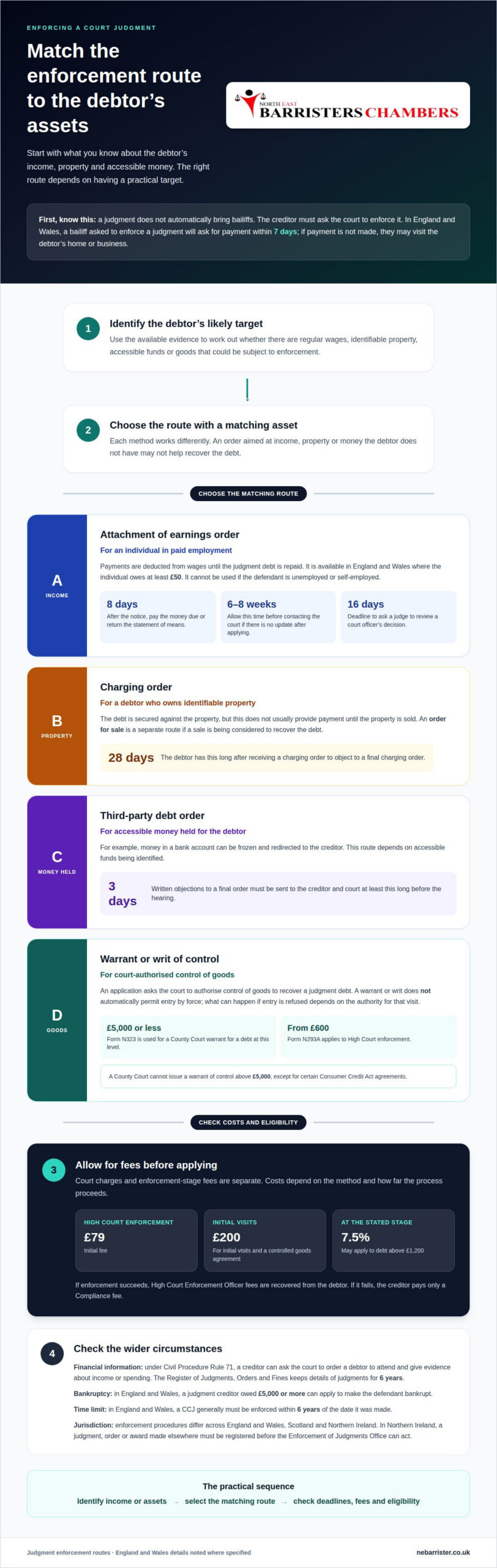
An attachment of earnings order can deduct payments from an employed debtor’s wages until the judgment debt is repaid. In England and Wales, it is available against an individual in paid employment who owes at least £50. It cannot be used if the defendant is unemployed or self-employed. That makes employment status central when considering this enforcement action.
After service of the attachment-of-earnings notice, the debtor must pay the money due or return the statement of means within 8 days. The information helps the court assess deductions from income, rather than requiring the creditor to collect the full balance at once. If there is no update after an application, allow 6-8 weeks before contacting the court. A creditor seeking a judge’s review of a court officer’s decision must apply within 16 days of the date stamped on the court’s envelope.
A charging order secures the debt against property owned by the debtor, but it does not usually provide payment until the property is sold. The debtor has 28 days after receiving a charging order to object to a final charging order. If a sale is being considered to recover the debt, an order for sale is a separate route from the charging order itself. For a county court judgment, the choice depends partly on whether the debtor has identifiable property or regular earnings.
A third-party debt order targets money held for the debtor, such as funds in a bank account. It can freeze that money and redirect it to the creditor. This may suit a case where accessible funds are identified, whereas an attachment of earnings order depends on paid employment and a charging order relies on property. Written objections to a final third-party debt order must be sent to the creditor and court at least 3 days before the hearing. Those distinctions help match the enforcement method to the debtor’s income, assets and circumstances.
Which enforcement of judgment method should I choose?
The right enforcement method depends on the debtor’s circumstances and the evidence available. A barrister can assess the options and explain the relevant court process before you apply for an order or warrant.
Choosing a method for the debtor’s circumstances
Choose a method by matching the debt to the debtor’s known income and assets. Regular wages may suit an attachment of earnings order; property may support a charging order, while accessible bank funds may point to a third-party debt order. This matters because an order aimed at unavailable assets may not help collect the debt. In England and Wales, a judgment creditor owed £5,000 or more can apply to make the defendant bankrupt, according to the Insolvency Service.
Finding out about finances and assets
Financial information helps identify which enforcement route has a practical target. A barrister can assess available records, debts and bankruptcy information, then advise whether an application to obtain information is appropriate. Under Civil Procedure Rule 71, a creditor can ask the court to order a debtor to attend and give evidence about income or spending. The Register of Judgments, Orders and Fines keeps details of judgments for 6 years. Where records show no money or assets, a barrister can help assess the available information and whether insolvency action is relevant.
If the debtor ignores an enforcement notice, the judgment remains unpaid. If an enforcement officer is refused entry, what can happen next depends on the authority for that visit. A warrant or writ does not automatically permit entry by force.
Differences between UK jurisdictions
Enforcement procedures differ across England and Wales, Scotland and Northern Ireland, so do not assume that an order or warrant can be used interchangeably across the UK. In Northern Ireland, a judgment, order or award made elsewhere must be registered before the Enforcement of Judgments Office can act. A judgment from overseas may also need recognition or registration before it can be enforced in the relevant jurisdiction.
A debtor can seek a stay of execution pending an appeal; in England and Wales, the creditor must receive the application paperwork at least four working days before the hearing. A barrister can advise on that challenge and present the reasons for pausing enforcement. For help assessing financial information or an enforcement challenge, consider direct barrister support.
What does enforcement cost?
Enforcement costs depend on the application and how far the process proceeds. A court fee is payable when you ask the court to collect a judgment debt.
Enforcement fees and court costs
Separate court charges from enforcement-stage fees before deciding how to proceed. High Court enforcement has staged fees: £79 initially, then £200 for initial visits and a controlled goods agreement. A further 7.5% may apply to debt above £1,200 at the stated stage.
Later stages may involve additional fees, depending on the enforcement stage. High Court Enforcement Officer fees are recovered from the debtor if enforcement succeeds; if it fails, the creditor pays only a Compliance fee.
Help with enforcement fees
Before applying, identify each charge and when it becomes payable. A barrister can explain the court fee for the application and distinguish it from bailiff or High Court enforcement fees. If cost is a concern, understand the likely charges before filing. An attachment of earnings application, a third-party debt order and a warrant follow different processes, so their fees are not interchangeable.
Applications for a warrant or writ
A warrant or writ application asks the court to authorise control of goods to recover a judgment debt. In England and Wales, form N323 is used for a County Court warrant for a debt of £5,000 or less; form N293A applies to High Court enforcement from £600. A County Court cannot issue a warrant of control above £5,000, except for certain Consumer Credit Act agreements.
A barrister can help select the appropriate route, prepare the application and present the relevant details. The court fee remains separate from professional assistance. For a County Court Judgment enforced through a High Court writ, Form No 53 is used. Court application support can help clarify which form and fee fit the enforcement sought.
Court enforcement of judgments
A judgment does not trigger enforcement automatically. The creditor must ask the court to act, and in England and Wales the available methods and deadlines depend on the judgment and the debtor.
Methods for enforcing a judgment
Enforcement methods follow different routes to pursue payment or secure a debt. A creditor may apply for a warrant or writ of control, an attachment of earnings order, a third-party debt order or a charging order, or start insolvency proceedings. The debtor’s employment, bank funds, property and other circumstances help determine which route may be suitable.
With a warrant or writ of control, bailiffs can visit the debtor’s premises and take control of goods to cover the debt. In England and Wales, goods required for the debtor’s employment, business or vocation are exempt from seizure up to a maximum value of £1,350, according to UK Parliament. A High Court bailiff should give at least 14 clear days’ notice before visiting to take control of goods. A court order authorises a particular enforcement method, but it does not guarantee that goods or funds will be available.
Other methods target specific resources. An attachment of earnings order requires an employer to make deductions, while a third-party debt order targets money held by a third party. A charging order secures a debt against property. Insolvency proceedings address qualifying debts through a separate process.
Time limits for enforcement
Time limits set when a creditor must act or seek permission. In England and Wales, a CCJ generally must be enforced within 6 years of the date it was made, according to the Ministry of Justice. If six years or more have passed, the creditor needs court permission to issue a writ of control.
A writ of control is valid for 12 months and may be renewed by the creditor. These deadlines matter when choosing a method: an application made late may need permission, and an unrenewed writ may expire before enforcement is completed. The relevant date and type of court order therefore shape the route forward.
For help assessing enforcement options and court proceedings, arrange court representation.
North East Barristers Chambers: Court Representation
North East Barristers Chambers provides court representation in civil proceedings connected to a judgment. If you need to challenge an application, seek a stay or present your position at a hearing, a barrister can explain the legal issues and represent you in court.
With Direct Access Barrister Services, you can instruct a barrister directly for legal advice and court representation, without a solicitor intermediary. This can be useful when enforcement is disputed or you need representation in court. The focus is on the judgment, the issues in your case and the outcome you are asking the court to consider.
Contact North East Barristers Chambers to discuss court representation for your judgment matter.
Make your next move with clarity
The key question is what you need the court process to achieve and which issues need attention first. Before taking another step, gather the judgment, enforcement notices and relevant correspondence. A clear account of what has happened helps focus advice on the practical issue, whether you are pursuing payment, responding to an application or preparing for a hearing.
If you are enforcing a court judgment in the UK, tailored legal advice can help you make an informed decision about what to do next. North East Barristers Chambers provides civil law advice and court representation, including in disputes about judgments or enforcement steps. You can discuss the documents, the procedural position and the outcome you want to pursue, then consider how court advocacy may support your case.
Contact North East Barristers Chambers to discuss your situation. A measured next step can help you approach the process with greater confidence.
Frequently Asked Questions
Can High Court bailiffs enter my premises?
High Court enforcement officers can attend the debtor’s home or business under a writ of control, but a writ does not give unrestricted entry to every premises. In England and Wales, High Court bailiffs should give at least 14 clear days’ notice before visiting to take control of goods. The authority stated in the writ and the type of premises affect what enforcement action can lawfully follow.
What is the first step before enforcing an order?
First, establish whether the judgment can still be enforced and whether a stay or appeal affects it. Gather the judgment, payment history and enforcement correspondence so advice can address the current position. When enforcing a court judgment in the UK, the correct court process depends on where the judgment was made and the debtor’s circumstances, not just the amount owed.
After obtaining a judgment, how can a barrister help with what comes next?
A barrister can review the order and explain the enforcement routes or court applications relevant to your circumstances. For example, if the debtor disputes the amount or applies to suspend enforcement, a barrister can advise on the issues and represent you at a hearing. Direct Access Barrister Services let individuals instruct a barrister directly for legal advice and advocacy, without a solicitor.
What are the judgment debtor’s assets, and how can a barrister help establish this?
A debtor’s assets may include wages, money held by a bank or property that could support enforcement. A barrister can advise on applying for an order to obtain information from the debtor. In England and Wales, the court can require an individual to attend and give evidence about income or spending. For a company debt, a company officer can be asked about its accounts.
Which enforcement option is best for your case?
The suitable option depends on the evidence about the debtor’s resources and the outcome you need. Regular employment may make recovery from income relevant, while identifiable property or funds may point to a different application. A barrister can help weigh those factors, explain procedural consequences and consider whether insolvency action is relevant, helping you avoid a process with no practical target.
How can a barrister help enforce a County Court judgment in England and Wales?
A barrister can advise on the appropriate County Court or High Court route, explain the application and represent you if the process becomes contested. For a County Court warrant of control, form N323 applies to a judgment debt of £5,000 or less. A creditor seeking a High Court writ for a County Court Judgment is directed to use Form No 53.