
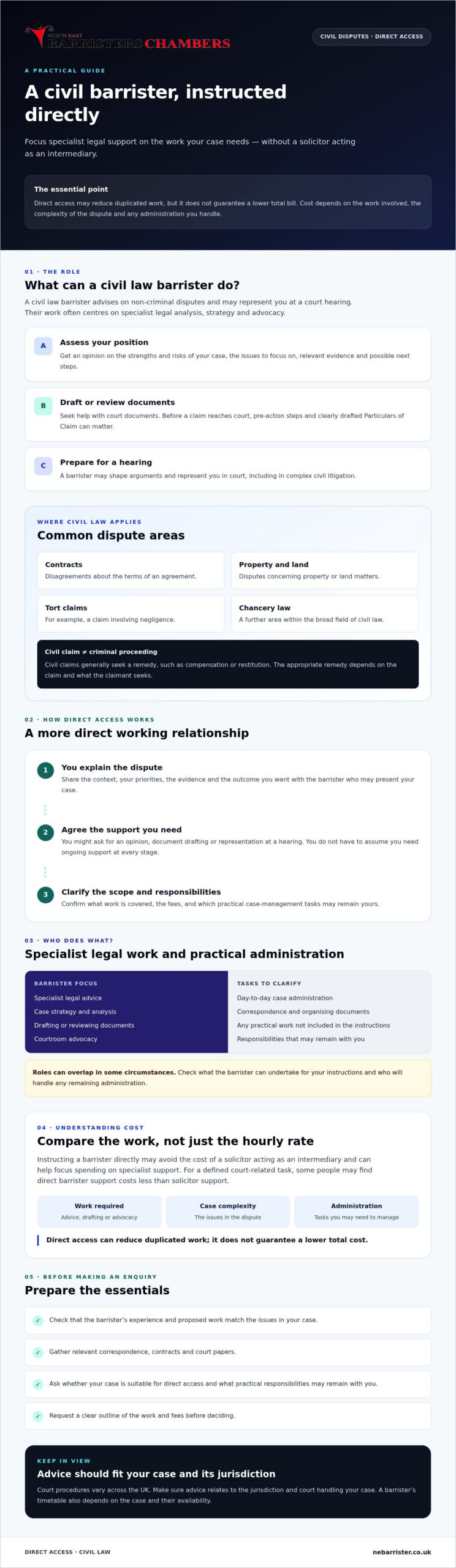
What if you could get specialist courtroom advocacy without paying a solicitor to act as an intermediary? Instructing a civil law barrister directly can help you focus legal support on the work your case needs. A barrister may assess your position, advise on the issues, draft or review court documents and represent you. Direct access may also help you avoid duplicated work, although the overall cost depends on the work involved.
If legal fees are rising, court procedures feel confusing or you’re worried about representing yourself as a Litigant in Person, it’s understandable to want a clearer route forward. You need practical advice you can act on, along with a realistic view of your case’s strengths, risks and next steps.
This guide explains how direct access works and how a barrister may support you through a civil dispute. You’ll learn what to expect from an expert opinion, document drafting and representation in court, as well as which practical responsibilities may remain with you. The aim is to help you decide what support you need and ask the right questions before instructing.
Key Takeaways
- A civil law barrister may help with disputes involving contracts, property or land. Check that their experience and proposed work match the issues in your case.
- Direct access lets you communicate with the barrister handling your case without instructing a solicitor as an intermediary.
- Pre-action steps and clearly drafted Particulars of Claim can matter before a civil claim reaches court.
- Check whether your case is suitable for direct access and gather relevant correspondence, contracts and court papers before making an enquiry.
- Clarify which practical case-management tasks may remain your responsibility when you instruct a barrister directly.
What is a Civil Law Barrister and When Do You Need One?
A civil law barrister is a legal specialist who may advise on a non-criminal dispute or represent a client at a court hearing. Barristers are known for advocacy and specialist legal analysis; you can read more about the role of a Barrister.
You might seek a barrister’s help after receiving a claim form, when you need an opinion on the strengths or risks of your position, or as you prepare for a hearing. Advice at the right stage can help you identify the issues, understand what evidence may be relevant and consider your next steps. A barrister may also represent you in court, including in complex civil litigation.
The Scope of Civil Law in the UK
Civil law concerns disputes between people, businesses and, in some cases, government bodies. Unlike criminal proceedings, which deal with alleged offences and potential punishment, civil claims generally seek a remedy such as compensation or restitution. The appropriate remedy depends on the claim and what the claimant is seeking.
The field is broad. It includes contract disputes, tort claims such as negligence, property matters and chancery law. A disagreement over the terms of a business agreement raises different legal questions from a claim about damage caused by another party. Identifying the type of dispute helps focus attention on the relevant legal issues and evidence. Court procedures also vary across the UK, so make sure advice relates to the jurisdiction and court handling your case.
Barrister vs Solicitor: The Key Differences
Solicitors often manage a case’s day-to-day administration, including correspondence and organising documents. Barristers typically focus on specialist legal advice, strategy and courtroom advocacy. The roles can overlap in some circumstances, so check what work a barrister can undertake for your instructions and which case-management tasks may remain yours.
The barrister vs solicitor cost question is about the overall work involved, not simply comparing hourly rates. Instructing a barrister directly may avoid paying for a solicitor to act as an intermediary. This may suit you if you need a defined service, such as an opinion, document drafting or representation at a hearing. Your total budget will depend on the work required and who handles any remaining administration. Ask for a clear outline of the work and fees before you decide.
The Advantages of Using a Direct Access Civil Barrister
Direct Access can be a focused way to obtain specialist support in a civil dispute. You can instruct a barrister for the work you need, such as advice on your position, document drafting or court representation, rather than assuming you need ongoing support at every stage. This can reduce duplicated work and help you keep the scope of your legal support under review.
The practical advantage is not simply having fewer people involved. You can explain the dispute, your priorities and your concerns directly to the advocate who may present your case in court. That gives the barrister first-hand context when assessing the issues and shaping arguments. It also gives you an opportunity to clarify what the agreed work covers and which tasks you may need to manage yourself.
How Direct Access Can Reduce Legal Fees
In a conventional arrangement, information and documents may pass between you, a solicitor and a barrister. Direct instruction can remove that extra handover and the potential for overlapping work. You can ask about a specific piece of support rather than assuming you need help with every part of a case. The right scope depends on your circumstances, so clarify responsibilities and fees before instructing.
For a defined court-related task, some people may find direct barrister support costs less than solicitor support. That does not guarantee a lower total bill. The work required, the complexity of the dispute and any administration you must handle all affect the overall cost. Direct Access can, however, let you focus spending on specialist advice, drafting or advocacy where it is most useful to your case.
Streamlined Communication and Strategy
Clear instructions matter. Speaking directly with your advocate means you can explain the context yourself, including the evidence, the outcome you want and the points that may need to be addressed in court. A civil law barrister can then give a specialist view and explain strategic choices in plain English.
Direct Access can also give you more control over the shape of the work. For example, you might seek an opinion before deciding how to proceed, then consider further support for a hearing if needed. The timetable depends on the case and the barrister’s availability, so direct instruction does not guarantee a faster result. For general background on how civil disputes sit within the court system, see the Courts and Tribunals Judiciary’s guide to Civil justice in England and Wales.
If you’re weighing up direct instruction for your dispute, you can explore direct access barrister services and consider what support your case requires.
Core Expertise: Common Civil Law Disputes
Civil disputes can involve financial pressure, disruption to a business or difficult decisions about property and inheritance. A barrister’s specialist view can help clarify the legal issues, assess the evidence and identify possible next steps. The relevant experience depends on the type and complexity of the claim, so check that the barrister’s expertise fits your dispute.
Contract and Business Litigation
A contract dispute might concern unpaid invoices, a disputed term or an alleged breach of a commercial agreement. The claim could involve anything from a small business debt to a high-value dispute. Reviewing the contract alongside relevant correspondence and other documents can help clarify what each party says was agreed and which issues remain unresolved.
Depending on the instructions, a barrister may advise on contractual terms, assess a breach of contract claim or represent a business in court. They can also help you consider the risks of settlement and whether alternative dispute resolution may be appropriate. Early advice can help focus the issues before positions become more entrenched. For organisations managing cross-border commercial tenders or navigating public procurement regulations, specialist legal resources such as appaltilab.it provide guidance on contract compliance and tender reviews.
Chancery and Property Matters
Property disputes may concern a boundary, a right of way, a restrictive covenant or the terms of a commercial lease. Some ownership disputes involve the Trusts of Land and Appointment of Trustees Act 1996, commonly known as TOLATA. These claims can turn on how property is owned, what was agreed and what evidence is available. A barrister can help analyse those issues and, where instructed, provide advocacy in court.
Professional negligence claims raise a different question: whether a professional’s service fell below the required standard and caused loss. The facts and evidence matter. For further background, see this guide to a professional negligence barrister.
Probate and Will Disputes
Disputes after someone’s death can involve concerns about a will, the administration of an estate or competing claims by beneficiaries. These cases can be legally and emotionally demanding. Before deciding whether to challenge a will, it’s important to understand the basis of the potential claim, the evidence needed and the court process involved. A barrister may advise or represent a client in a complex inheritance claim, including in the High Court where appropriate.
Not every disagreement needs to end in a hearing. Depending on the circumstances, parties may explore ways to resolve the dispute without a trial. A barrister can advise on the strengths and risks of a position, helping you make informed decisions about how to proceed.
Navigating the Civil Court Process with Confidence
A civil claim follows a series of steps, and understanding what each involves can make the process easier to manage. A civil law barrister can help you understand the legal issues, prepare key documents and present your case. The procedure depends on the type of claim and the court, so seek advice that fits your circumstances and jurisdiction.
Before a claim is issued
Before starting court proceedings, parties are generally expected to follow the relevant Pre-Action Protocol, where one applies. These steps are designed to help parties exchange information, understand the dispute and consider whether it can be resolved without a claim. Check which protocol applies and what it requires, as the steps taken before a claim may affect how the court views the case.
If a claim is issued, the Particulars of Claim set out the facts relied on and the remedy being sought. They should explain the case clearly and supportably. A barrister can help shape the legal argument and draft or review the document, so the key issues are easy to identify rather than buried in a long account of events.
Case management and preparation
After a defence is filed, the court may ask the parties to complete a Directions Questionnaire. This gives the court information to help decide how the claim should proceed, including what steps are needed to prepare it for trial. A Case Management Conference may then be listed to address directions, such as evidence and timetable. Keep track of court orders and deadlines, as they set out what each party must do next.
Preparation also involves organising relevant documents and witness statements in the required format. Where compensation is claimed, a Schedule of Loss can set out the losses being sought and how they are calculated. A barrister can assess litigation risks, identify gaps in the evidence and help you consider whether the likely outcome justifies the time and expense of continuing.
Settlement, ADR and trial
Alternative dispute resolution, including mediation, can offer a route to settlement without a trial. The court may encourage parties to consider ADR, but whether it is appropriate depends on the dispute. Refusing to engage without good reason may have cost consequences, assessed in context. Ask for advice before accepting or rejecting an invitation.
If the case reaches trial, the parties present evidence and witnesses may be questioned. Your barrister can put forward your case, challenge the other side’s evidence through cross-examination and make submissions to the judge. This focused advocacy can help the court understand the key facts and legal arguments.
If you need help preparing for a civil hearing, discuss direct access court representation with a barrister.
How to Instruct a Civil Barrister Directly
Start by checking whether your case and the work you need are suitable for Direct Access. Be specific about the support you’re seeking: a legal opinion, help with court documents or representation at a hearing. A civil law barrister can discuss the issues, explain what work they may be able to undertake and identify practical tasks that would remain your responsibility.
Is Your Case Suitable for Public Access?
Many civil matters may be suitable, but eligibility depends on the case and the service required. Some cases involve administrative steps known as the conduct of litigation, such as issuing proceedings or managing correspondence with the court. Ask at the outset whether these tasks are included in the proposed instructions or whether you’ll need to handle them yourself. Consider whether you can manage the remaining responsibilities, particularly if the dispute is complex or has strict deadlines.
Direct access barrister services allow individuals and businesses to instruct a barrister directly for appropriate legal advice and court representation. Confirm the suitability of your case and the scope of the work for your circumstances before proceeding.
Prepare for the First Discussion
Before making an enquiry, gather the documents that explain the dispute. A clear, organised summary can help the barrister understand what has happened and what support you need. Include, where relevant:
- Key correspondence between the parties
- Contracts or other documents central to the dispute
- Any claim forms, court orders or other court papers
- Important dates, deadlines and the outcome you’re seeking
Use the website contact route to explain the issue and ask about the next step. You don’t need to write a perfect legal summary. A concise account of the dispute, its current stage and the help you’re looking for gives a useful starting point. Mention any upcoming court dates or deadlines so they can be considered.
In an initial discussion, you can explore the legal issues, possible strategy and work required. Ask what the fee covers before deciding how to proceed. The client engagement letter should set out the agreed scope, including what the barrister will do and which tasks are not included. Read it carefully and raise any uncertainties before confirming your instructions.
Ready to discuss your circumstances? Contact us today to discuss your civil case.
Take the Next Step with Clear Legal Support
Direct access can help you focus specialist legal support on the advice, drafting or court representation your civil dispute needs. A civil law barrister can assess the issues, explain your options and advocate for you in court. You’ll also have a clearer understanding of the work involved and your responsibilities when instructing directly.
Individuals and businesses can instruct barristers directly for appropriate legal advice and representation in civil matters. The right scope of support depends on your case. Sharing its current stage, key documents and any court deadlines can help establish what assistance may be appropriate.
You don’t have to work out the next step alone. Discuss your civil case and the direct access support you need.
Frequently Asked Questions
Can a civil law barrister help me if I have already started my claim?
Yes, you may be able to instruct a barrister after your claim has started. They can review the current position, advise on the issues and, if agreed, assist with documents or represent you at a hearing. Share the claim form, particulars, defence, court orders and upcoming deadlines at the outset. The barrister can then assess what support is suitable and explain any tasks you’ll need to manage yourself.
What is the difference between a civil barrister and a criminal barrister?
A civil barrister advises and represents clients in non-criminal disputes, such as contract, property or inheritance claims. A criminal barrister works on cases involving alleged offences and criminal proceedings. Both may provide specialist legal advice and advocacy, but the relevant law, court process and outcomes differ. Direct access support is available in civil and criminal law, with the appropriate service depending on the nature of your case.
How much does it cost to hire a civil law barrister directly?
The cost depends on the work involved, the complexity of the dispute and whether you need advice, drafting, representation or a combination. There isn’t enough information here to give a reliable figure for your case. Before instructing, explain what you need and ask for the proposed fee, what it covers and whether further work would be charged separately. Check the engagement terms carefully so you understand the likely scope and cost.
Do I need a solicitor as well as a barrister for a civil trial?
Not necessarily. You can instruct a barrister directly for civil law advice and court representation, without a solicitor acting as an intermediary. However, you may still need to manage practical case tasks, such as correspondence or filing documents, depending on the work agreed and what the case requires. Ask the barrister to set out responsibilities clearly before you proceed, particularly if your claim involves complex procedure or several stages.
Can a barrister help me draft a statutory demand or a letter before action?
A barrister may be able to advise on or draft a legal document, depending on the instructions and circumstances. Explain the purpose of the statutory demand or letter before action, the relevant background and any deadlines. Ask whether the barrister can undertake that specific work and what information they need from you. A document’s suitability and effect depend on the facts, so don’t rely on a template without checking that it fits your situation.
What happens if my civil case is too complex for Direct Access?
If the case or the tasks required aren’t suitable for Direct Access, the barrister should explain the limitation and discuss what support they can provide within the agreed scope. You may need to manage additional case administration yourself or consider another appropriate source of support. Complexity alone doesn’t determine suitability. The key questions are what work is needed, who can undertake it and whether you can manage any responsibilities that remain with you.
Will a barrister attend a mediation hearing with me?
A barrister may be able to attend mediation as your advocate if this is within the work agreed. They can help you present your position, consider proposals and understand the legal issues during discussions. Mediation is different from a court hearing, and attendance or preparation should be confirmed in advance. Ask what the barrister will do, what documents they need and whether any follow-up advice is included in the agreed instructions.
How do I pay my barrister fees under the Direct Access scheme?
Payment arrangements should be set out before you confirm your instructions. Ask for clear details of the fee, when payment is due, what work it covers and how additional work will be agreed. The engagement letter should record the agreed terms. Don’t assume a particular payment method or instalment option is available; check directly with the chambers. Keeping the scope and payment arrangements in writing helps you plan and avoid uncertainty as the case progresses.