
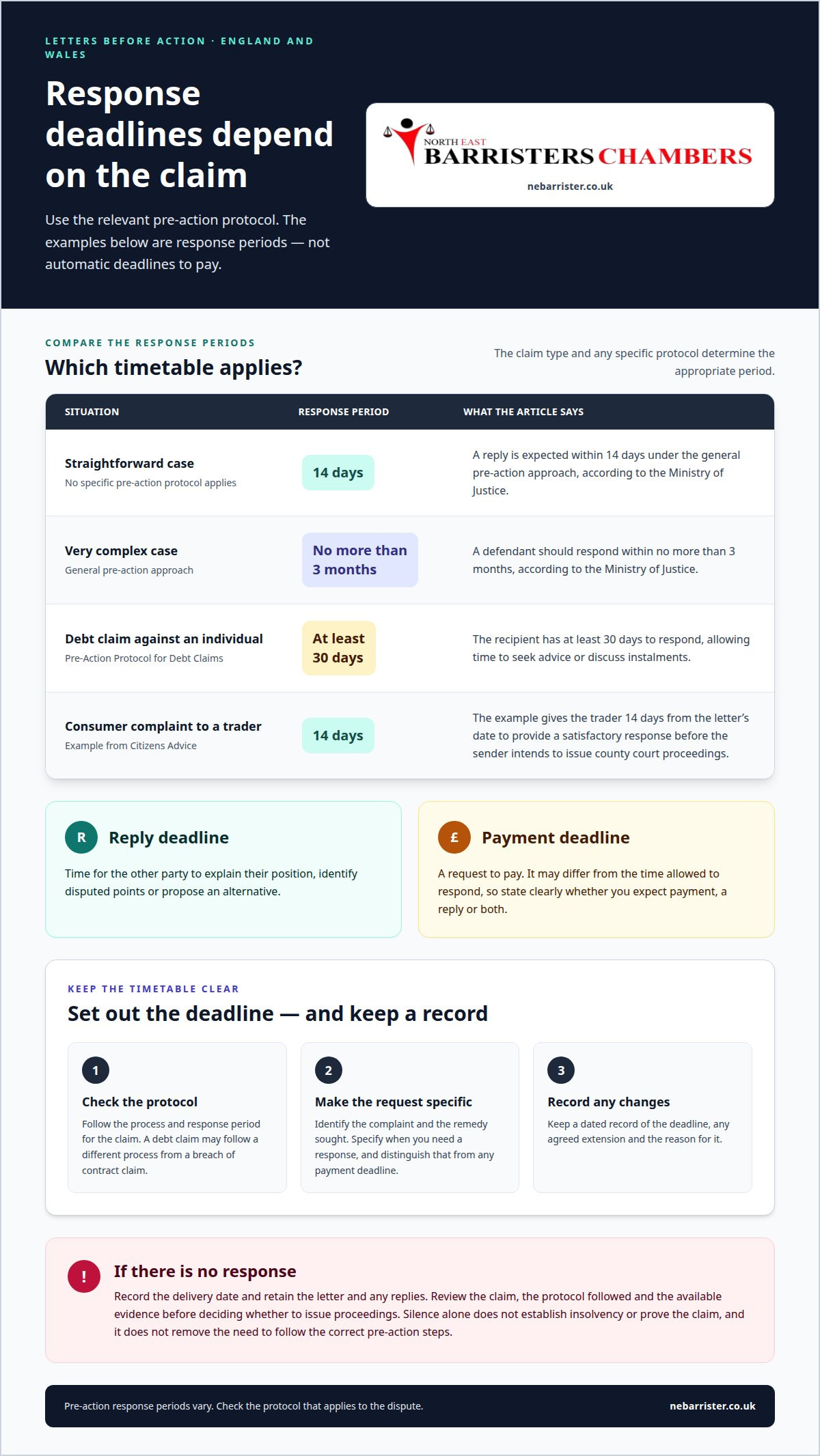
A letter before action is not just for unpaid invoices; it can be used in civil disputes such as breach of contract and property disputes. The content of a letter before action should explain the basis of the claim, summarise the key facts and say what outcome the sender wants. In England and Wales, where no specific pre-action protocol applies, a reply is expected within 14 days in a straightforward case under the general pre-action protocol, according to the Ministry of Justice. A very complex case should receive a response within no more than 3 months.
It’s understandable to be unsure when to send a letter before action or how much time to give the other party. It can clarify the dispute and give both sides an opportunity to resolve it before court proceedings, but the right approach depends on the type of claim and any relevant protocol.
This article explains what to include, which disputes a letter may suit, when to send it and how response deadlines work. It also covers what to consider if the other party disputes the claim, does not reply or makes an offer to settle.
Key Takeaways
- A letter before action can address civil disputes beyond unpaid invoices. Its purpose and the details it needs depend on the claim.
- Use the response period that applies to the relevant pre-action protocol; a single deadline does not fit every dispute.
- Set out the issue clearly and consider settlement or another form of dispute resolution before starting court proceedings.
- For help assessing a civil dispute or preparing for court, North East Barristers Chambers offers Direct Access Barrister Services and Court Representation.
Can a letter before action be used for any dispute?
Yes. A Letter Before Action and a Letter Before Claim are two names for the same document. They can be used in civil disputes involving unpaid debts, breach of contract, property, construction, personal injury or intellectual property. The suitable pre-action process depends on the type of claim and the parties involved.
Requirements can differ between debt, consumer, housing and professional negligence claims. England and Wales has specific pre-action protocols for some disputes, including debt claims; where one applies, its steps and response periods should be followed. Otherwise, the general pre-action approach applies, including a 14-day reply expectation in a straightforward case, according to the Ministry of Justice.
The content of a letter before action should identify the parties and explain the claim’s legal basis, key facts and resulting harm. State what you want the defendant to do, such as pay a specific sum, provide a remedy or take another clear action. For a money claim, show how you calculated the amount, separating the principal debt from interest and other claimed losses. Include relevant documents, such as a contract, invoices, correspondence or reports.
For eligible commercial debts in the UK, statutory interest is 8% above the Bank of England base rate, according to legislation.gov.uk. Claim only interest that applies to the debt, and explain its basis and calculation. Court fees are separate from the amount owed. Work them out using the applicable court fee for the claim and state them separately, rather than folding them into the debt.
If the defendant disputes the claim, their response should explain why, identify the disputed facts and parts of the claim, and give details of any counterclaim. Keep dated copies of the letter, attachments, delivery records, replies and settlement offers. These records clarify what happened before proceedings and may matter if the case goes to court. Ignoring a letter can have consequences, including the court considering the parties’ pre-action conduct.
Response deadlines under pre-action protocols
Response periods depend on the dispute and any applicable pre-action protocol. Distinguish the time to reply from the deadline to pay, as they may differ.
Payment and response periods
A response period gives the other party time to explain their position or propose an alternative, while a payment deadline asks them to pay. In a straightforward case where no specific protocol applies, a reply is expected within 14 days under the general pre-action protocol in England and Wales, according to the Ministry of Justice. In a very complex case, a defendant should respond within no more than 3 months, according to the Ministry of Justice.
For a debt claim against an individual, the Pre-Action Protocol for Debt Claims requires at least 30 days to respond to the letter. That period gives the recipient time to seek advice or discuss instalments. Don’t treat a reply deadline as an automatic payment deadline: state clearly whether you expect payment, a response, or both.
Allowing the trader time to respond
Giving a trader time means setting a clear, reasonable date to reply before taking further action. In a consumer dispute, for example, identify the complaint and the remedy sought, then specify when you need the trader’s response. A Citizens Advice example gives a trader 14 days from the letter’s date to provide a satisfactory response before the sender intends to issue county court proceedings.
Follow the relevant protocol rather than applying one example to every claim. A breach of contract may involve a different process from a debt claim. Keep a dated record of the deadline, any agreed extension and the reason for it. This helps both parties understand the timetable.
Steps after no response
If the debtor remains silent past the applicable deadline, record the delivery date and retain the letter and any replies. Then review the claim, the protocol followed and the available evidence before deciding whether to issue proceedings. Silence alone does not establish insolvency or prove the claim, and it does not remove the need to follow the correct pre-action steps.
If the other party disputes the claim, consider whether further documents, negotiation or another form of dispute resolution could narrow the issues. If proceedings appear necessary, court representation may help you present your position.
Trying to resolve a complaint before going to court
Follow the pre-action protocol that applies to the claim. If none applies, parties should exchange correspondence and information proportionately before issuing proceedings. A letter that merely threatens court action, without explaining the dispute or the remedy sought, is unlikely to help resolve it. Set out the key facts and documents, identify what remains unresolved, and invite the defendant to respond or propose a settlement.
Alternative dispute resolution can include a practical settlement discussion or another suitable process. An offer to resolve the dispute may narrow the issues even if the parties disagree about part of the claim. Keep a record of proposals, replies and relevant documents. If a party unreasonably refuses ADR or fails to respond to an invitation, a court may consider that conduct and impose sanctions.
Non-compliance can also affect how a case is managed and who pays costs. Under CPR 3.1(4) to (6), a court may take pre-action conduct into account when managing proceedings. CPR 44.3(5)(a) allows the court to consider non-compliance when making costs orders. The Practice Direction on Pre-action Conduct and Protocols also identifies possible sanctions at paragraphs 13-16.
The consequences depend on the circumstances and the parties’ conduct, not simply on whether they reach a settlement. If proceedings are issued and the dispute is later settled, the court can still decide costs, taking conduct and proportionality into account. A clear record of attempts to resolve the dispute helps show what each party did, which documents were exchanged and whether further steps were reasonable.
When to send a letter before court action
Send a formal letter when direct communication has not resolved a civil dispute and you are ready to explain your claim clearly. For an unpaid business-to-business invoice, the creditor may first send an invoice chaser; if it remains unpaid for more than 14 days, consider a letter before action. This gives the other party a clear account of what is owed and a chance to respond before litigation.
Timing depends on the applicable pre-action protocol. In England and Wales, sending a letter before action is not compulsory for every civil claim, but some protocols encourage or require one. The Civil Procedure Rules support early information exchange, settlement and dispute resolution. Check which process applies before issuing proceedings, then allow the response period it requires. A letter sent too early may not explain the dispute fully; one sent too late may leave less time to resolve it.
For a challenge to a public body, a person considering judicial review should normally send a pre-action letter before applying for permission to begin proceedings. It should identify the decision or action being challenged and provide relevant, necessary documents. A letter that only threatens legal action does not fulfil that purpose. Where the complaint concerns HMRC, also report it to the relevant business unit’s complaints team.
Do not let pre-action exchanges distract from a statutory time limit. In England and Wales, pre-action conduct and protocols do not change the deadline for starting proceedings. If proceedings must begin to protect that deadline before pre-action steps are complete, the parties should apply to the court for a stay while they complete those steps. Keep dated copies of formal communications and settlement proposals so the sequence is clear.
If you’re weighing the timing of a civil claim or preparing for litigation, get help with civil court representation.
North East Barristers Chambers
North East Barristers Chambers provides direct access to barristers for individuals and businesses dealing with civil disputes. If you are unsure whether a letter is suitable, how to respond to a reply or whether court proceedings are the next step, a barrister can advise on your circumstances. If the dispute proceeds to court, court representation can help you present your case.
The right next step depends on the claim, the documents and the response received. Discuss these points and the available options before deciding how to proceed. Contact North East Barristers Chambers to discuss your civil dispute.
Take the next step with clarity
Before acting, consider what outcome would resolve the dispute and whether your evidence supports that position. The content of a letter before action is only one part of the decision. The next step may depend on the reply, the available documents and whether negotiation remains realistic. If you are unsure how to assess these factors, legal advice can help you understand your options and prepare for what may follow.
North East Barristers Chambers provides direct access barrister services and court representation, including for civil and criminal law matters. Discuss your circumstances and decide how to proceed with a clearer understanding of the issues. You do not need to have every detail resolved before taking that first step.
Contact North East Barristers Chambers to discuss your legal matter and possible next steps. A clear plan can help you move forward with confidence.
Frequently Asked Questions
What is a letter before claim?
A letter before claim is a formal notice explaining that someone intends to pursue a civil claim if the dispute remains unresolved. It is also called a Letter Before Action. For example, a supplier might write to a business that has not paid for agreed work, explaining the issue and the outcome sought. The letter gives the recipient a chance to consider the claim before proceedings begin.
What are the pre-action protocols?
Pre-action protocols set out how parties should communicate about particular types of civil claims before court proceedings. They aim to help both sides understand the issues, consider settlement or alternative dispute resolution, and prepare efficiently if a claim proceeds. The relevant protocol depends on the dispute. A debt claim, for instance, may follow a different process from a personal injury or professional negligence claim.
What should a letter before action contain in England and Wales?
The letter should make clear who is claiming, who the claim is against and what happened. Explain the basis for the claim, identify the outcome you want, and show how you calculated any sum claimed. For example, a contractor seeking payment could distinguish the unpaid invoice from any additional amount claimed, then identify the work and agreement related to the invoice.
What information must be included in a letter before claim under the Pre-Action Protocols?
The exact requirements depend on the protocol for the dispute, so there is no single checklist for every claim. A letter should give the recipient enough information to understand the claim and respond meaningfully. A debt claim, for example, may require different information and steps from a property dispute. Identify the relevant protocol first, then follow its requirements alongside the general pre-action approach.
How do you set out the facts and legal basis in a letter before action?
Set out events in a clear chronology and connect each important event to the basis of the claim. For example, explain when a service was agreed, what the contract required, what happened instead and how that caused loss or another problem. Refer to the relevant contract term or legal ground in plain language. Separating the events from your explanation of why they support the claim makes your position easier to understand.
What documents and evidence should be enclosed with a letter before action?
Include documents that help explain or support the specific dispute, rather than sending an unfiltered bundle. Depending on the claim, these might include the contract, relevant correspondence, invoices, photographs or reports. For a building-work disagreement, the agreement, messages about the work and a relevant report may help show what was agreed and what is disputed. List each enclosure in the letter so the recipient can understand its relevance.