
Good courtroom manners start before the hearing begins. For courtroom etiquette for defendants in the UK, arrive 30 minutes before the time on your hearing letter, follow the usher’s directions and stand when asked if you’re able. Keep your phone silent in the hearing room, and speak clearly and politely when it’s your turn.
It’s understandable to feel unsure, especially if this is your first court appearance. The practical rules of courtroom etiquette for defendants in the UK are straightforward: listen carefully, don’t interrupt and answer the questions put to you. This article explains when to arrive, how to behave when the judge enters, what to do with your phone and how to address the court. It also covers preparing for the hearing, so you can focus on your case rather than the courtroom routine.
Key Takeaways
- Plan to arrive early and check in with the court usher so staff know you’re there.
- Follow the usher’s directions when the judge enters, and stand if you’re able and asked to do so.
- Silence your phone before entering the hearing room, and keep it out of use during proceedings.
- Wait for your turn to speak, listen carefully and answer the questions put to you clearly and politely.
1. Standing or remaining seated when a judge enters
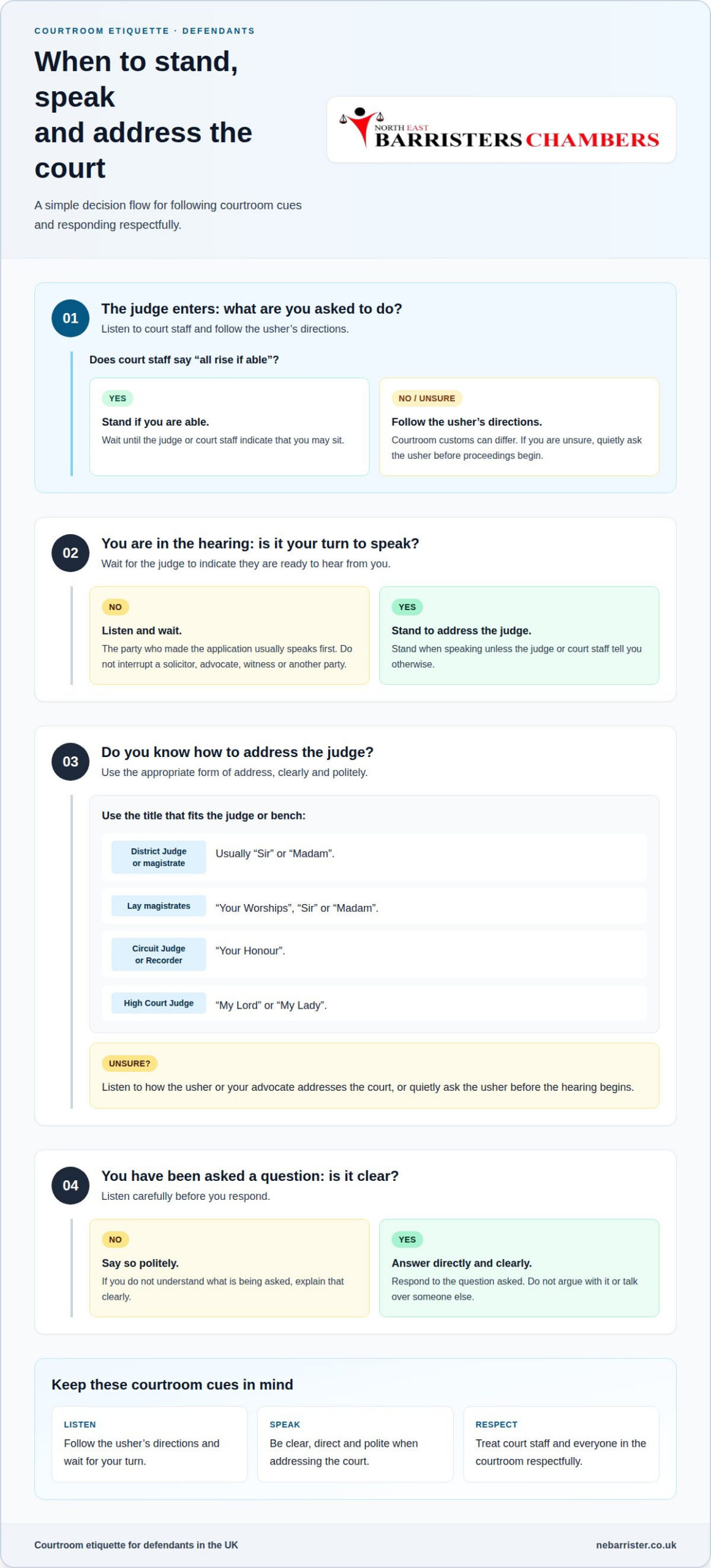
When court staff say “all rise if able”, stand if you can. Courtrooms have different customs: people may remain seated when a district judge or magistrate enters, while they should stand for a circuit judge until permitted to sit. Follow the usher’s directions if you’re unsure. In a Youth Court, the same practical approach applies. HM Courts & Tribunals Service says Youth Courts hear cases involving young people aged 10 to 17.
Address the judge or magistrates politely and clearly. A District Judge or magistrate is usually addressed as “Sir” or “Madam”; a bench of lay magistrates may be addressed as “Your Worships” or “Sir” or “Madam”. If you’re unsure of the correct form, listen to how the usher or your advocate addresses the court. Stand when speaking to the judge unless the judge or court staff tell you otherwise. Don’t interrupt a solicitor, advocate, witness or another party.
Courtesy applies outside the courtroom, too. Speak respectfully to court staff and officials, follow their directions and keep your phone silent during the hearing. If the judge speaks to you, listen before answering. A clear, direct response is more useful than arguing with the question or talking over someone else. If you don’t understand what’s being asked, say so politely.
There’s no formal dress code for court or tribunal buildings in England and Wales, but choose clean, suitable clothing for a formal setting. A suit isn’t essential; avoid casual or unsuitable items such as sportswear, shorts and flip-flops. Court staff may refuse entry if your clothing is inappropriate.
You may bring one support person to a court or tribunal hearing in England and Wales. They can accompany you, but should follow staff instructions and courtroom etiquette. If you’re unsure whether to stand or how to address the bench, quietly ask the usher before proceedings begin.
2. Arriving and checking in before a hearing
In England and Wales, aim to arrive 30 minutes before the time stated in your hearing letter. This gives you time to find the courtroom, pass security and tell the court usher you’re there. Courts may hear cases in the order they arrive or according to which cases are ready, so arriving early helps you avoid missing your case being called.
Allow time for security checks. Staff may check your bags and pockets as you enter the court building. Don’t bring weapons, glass, tools or sharp objects, as these can cause problems at the entrance. Once inside, find the courtroom named in your letter and give the usher your name. The usher can record your arrival and explain where to wait.
Bring your hearing letter and the case papers relevant to the day. Take copies of documents you’ve already sent to court, as the judge may not have read the full file. If you plan to give the judge new documents or evidence, bring a copy for the other party as well. For example, for a civil hearing, organise your papers so you can find the relevant document quickly.
Wear clean, suitable clothing for a formal court setting. A suit isn’t required, but your clothing should be respectful and appropriate. Be polite to court staff and other members of the public while you wait. If a solicitor or barrister is representing you, let them know you’ve arrived.
If you’re running late, contact the court using the details in your hearing letter as soon as possible, then tell the usher when you arrive. If you miss the hearing, contact the court promptly to explain and ask what happened and what you need to do next. Cases may be called when ready, so don’t assume your hearing is still waiting. If you need help preparing your case, Court Representation can help you understand what to expect.
3. Mobile device use and taking notes
Before entering the hearing room, silence your mobile phone and notifications. In England and Wales, people attending a court or tribunal hearing must silence calls and notifications. Switch off any device the court doesn’t permit, and keep your phone out of sight rather than checking messages while someone is speaking. A ringing phone can interrupt proceedings and distract everyone, including the judge, witnesses and anyone accompanying you.
Use a paper notebook and pen if you need to record points during the hearing. Note the question, the answer and any instruction from the judge, then wait for a pause before writing. Don’t use your phone as a notebook unless the court has allowed it. If you need to refer to a document, keep it ready on paper so you aren’t searching through a device while others address the court.
These practices apply across the UK, but courtroom procedures differ between England and Wales, Scotland and Northern Ireland. The instruction to silence phones in court and tribunal hearing rooms applies specifically in England and Wales; elsewhere, follow the court’s directions. Read your hearing letter, check signs at the entrance and ask the usher before proceedings begin if you’re unsure whether you may use a device. Don’t assume a phone allowed in the building is also allowed in the courtroom.
Take care with drinks, too. If you bring a hot drink, use a flask or a cup with a lid, not a glass. Security staff may ask you to take a sip before entering. Keep drinks away from court papers and put them aside before the judge enters if asked. Whether you bring a phone, notebook or drink, follow staff instructions promptly. If the court asks you to put a device away or leave it outside, do so before entering the hearing room.
4. Speaking and behaving in the courtroom
The usher organises the courtroom, calls parties into hearings and passes information between the parties and the judge. If you’re unsure where to sit or when your case is called, ask the usher quietly. Once the hearing starts, wait for the judge to indicate they’re ready to hear from you. The party who made the application usually speaks first, so don’t assume you should begin immediately.
When it’s your turn, stand to address the judge unless told otherwise. A Circuit Judge or Recorder is addressed as “Your Honour”; a High Court Judge as “My Lord” or “My Lady”. If you’re unsure of the correct form, ask the usher before the hearing begins. Speak clearly, answer the question asked and pause when the judge or another advocate is speaking. Don’t interrupt a witness or talk over the other party.
Keep your papers in order so you can find the document or evidence being discussed. If you need to hand something to the judge, ask permission before approaching the bench or passing papers forward. If you give evidence, you’ll be asked to swear an oath or make an affirmation that your evidence is true. Listen to each question and answer honestly; tell the court if you don’t understand.
If you need an interpreter, contact the court using the details on your hearing letter before you attend, so you can explain what support you need. For disability-related support, contact the court or tribunal in advance to request reasonable adjustments. During the hearing, you can ask a member of staff for a break. Accept the judge’s ruling respectfully; any challenge should follow the proper appeal process, not an argument in court. If you need support presenting your case, arrange court representation.
North East Barristers Chambers: Court Representation
North East Barristers Chambers provides court representation for people seeking professional advocacy. If you’re facing a criminal or civil hearing, a barrister can present your case and address the court on your behalf. With Direct Access Barrister Services, you can instruct a barrister directly without needing a solicitor.
Consider representation if you’re unsure how to present evidence, respond to the other party or make submissions. A barrister can help you understand the hearing process and prepare for your court appearance. The right support depends on your case and what you need from representation.
To discuss Court Representation for your case, contact North East Barristers Chambers.
Take your next step with confidence
Knowing courtroom etiquette for defendants in the UK can help you approach your hearing with a clearer plan. If you’re unsure how to present your position or respond to the case against you, consider getting legal advice before your court appearance. Preparation can help you identify the issues to address and decide what support you need.
North East Barristers Chambers offers Direct Access Barrister Services and court representation, including in criminal law. You can instruct a barrister directly for professional advocacy without needing a solicitor. This can suit you if you want representation focused on your court hearing.
Discuss your case with North East Barristers Chambers and consider what support would help you take the next step. You can prepare calmly and approach the process with greater clarity.
Frequently Asked Questions
Need help preparing for court?
Yes. North East Barristers Chambers provides Court Representation and Direct Access Barrister Services for criminal, civil and family cases. If you want a barrister to help with your case, call the office on 0191 369 2383 to set up an appointment. Explain the type of hearing and what stage your case has reached, so the discussion can focus on the support you need.
How should a defendant address the judge or magistrates in England and Wales?
Use the form of address appropriate to the judge and court. A District Judge or magistrate is generally addressed as “Sir” or “Madam”; a bench of lay magistrates may be addressed as “Your Worships”. A Circuit Judge or Recorder is addressed as “Your Honour”, while a High Court Judge is addressed as “My Lord” or “My Lady”. Ask the usher if you’re unsure.
What are the rules for speaking, standing and behaving in a UK courtroom?
Good courtroom etiquette for defendants in the UK means waiting until the judge invites you to speak, then addressing the court respectfully. Listen without interrupting, answer the question asked and ask for clarification if you don’t understand. Stand when court staff direct you to, if able. If you need a break, ask a member of court staff rather than leaving without explanation.
What are the rules about phones, recording and social media in court?
Keep your phone silent and follow any court instruction to switch it off or put it away. Don’t assume you may use a phone to record proceedings or take photographs; ask court staff before attempting to record anything. Avoid posting details of the hearing on social media while it’s under way. Courtroom directions take priority, so comply promptly if staff tell you to stop using a device.
How should a defendant plead and when should they speak during a hearing?
A plea is a decision about the charge, not a matter of courtroom manners. Don’t guess or feel pressured to choose one simply to get through the hearing. If you’re unsure what a plea means for your case, seek legal advice before responding. During proceedings, wait until the judge addresses you or invites you to speak, then answer clearly and directly.