
Could a creditor’s petition put your company’s bank account at risk before a court has heard your side? Defending a winding up petition means acting quickly, but speed alone isn’t enough. Directors need to check the debt, the supporting evidence and the procedure before deciding how to respond.
A temporary cash-flow problem is not the same as a genuine dispute about whether a debt is owed. Treating one as the other can lead to costly mistakes. The process also differs across the UK, so identifying the relevant jurisdiction is an early priority.
This guide sets out practical steps to take, possible grounds for opposing a petition and the evidence that may support your position. It also explains how direct barrister advice can help you assess the arguments and prepare for court representation. The outcome depends on the facts and the court’s decision, but organising the key documents and dates can help you make informed decisions about what to do next.
Key Takeaways
- Defending a winding up petition starts with checking the debt, supporting evidence and procedure, not simply reacting to the demand.
- Identify whether there may be a genuine dispute, a relevant cross-claim, payment or a material procedural defect.
- Keep the petition, proof of service, court papers and creditor correspondence together to support a clear, evidence-based response.
- Don’t assume paying the petition debt is the only possible response, or make allegations the evidence cannot support.
- A directly instructed barrister can assess legal arguments, advise on evidence and provide advocacy. Case administration may need separate arrangements.
Defending a winding up petition: what it means and why time matters
A winding-up petition is a court process through which a creditor asks for a company to be compulsorily liquidated. Receiving one is serious, but it does not mean the company has already been wound up. The petition puts the issue before the court, which decides whether to make a winding-up order. The creditor cannot liquidate the company unilaterally.
What a winding-up petition asks the court to do
If the court makes an order, a liquidator takes control of the company’s affairs, realises its assets and distributes funds in accordance with insolvency law. In practical terms, compulsory liquidation is a court-led process for bringing the company’s affairs to an end. It differs from voluntary closure, which begins through the company’s own decision-making process. For a general explanation of the terminology, see Liquidation (Winding-Up).
A petition is not itself a winding-up order. The court must consider the application and the company’s position. Directors should take the petition seriously and act promptly, but should not assume the outcome has already been decided.
Why directors should treat the petition as urgent
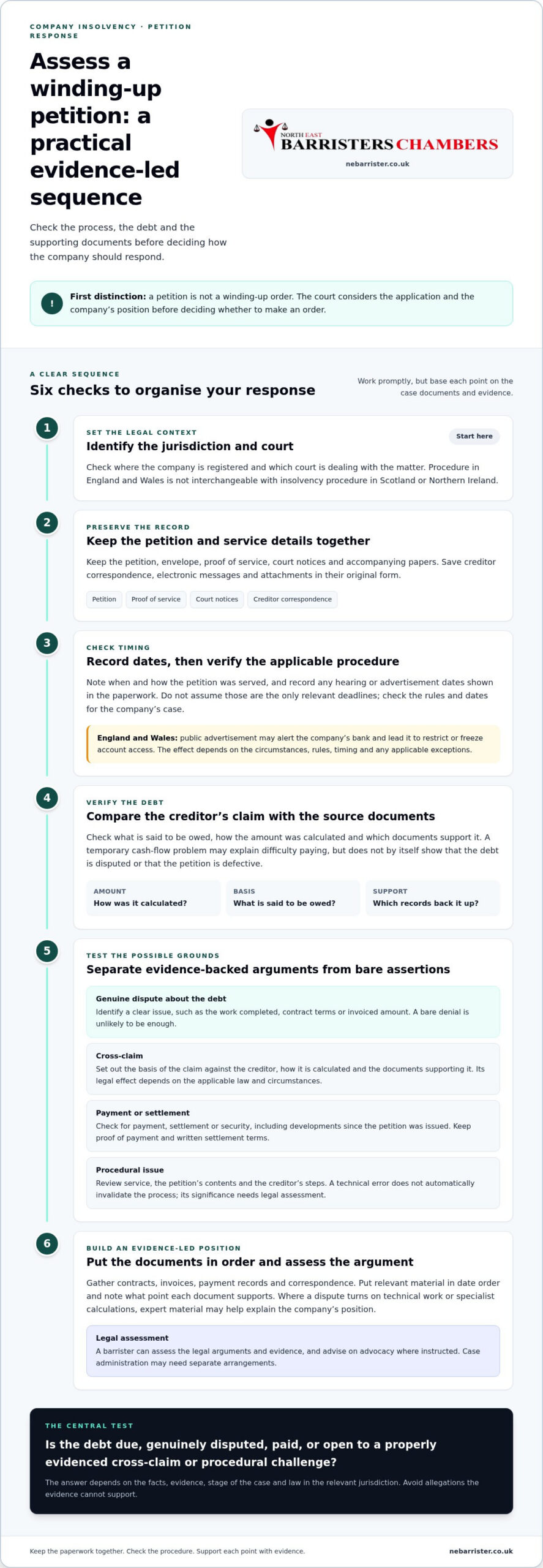
Dates can have practical consequences before a hearing. In England and Wales, public advertisement of a petition may alert the company’s bank and lead it to restrict or freeze access to an account. This can disrupt payments and trading. The effect depends on the circumstances, and the relevant rules, timing and exceptions must be checked against the current procedure and documents served.
As soon as the petition arrives, record when and how it was served. Keep the envelope, petition, accompanying notices and court documents together. Note any hearing or advertisement dates shown in the paperwork, but don’t assume those are the only relevant deadlines. Check the applicable rules and dates for the company’s case promptly.
Jurisdiction matters. Winding-up procedure in England and Wales is not interchangeable with insolvency procedure in Scotland or Northern Ireland. The court process, terminology and requirements can differ. Identify where the company is registered and which court is dealing with the matter before taking procedural steps.
Defending a winding up petition starts with understanding what has been served and what happens next. Keeping the documents together and checking the dates gives directors a firmer basis for assessing the company’s position.
How to assess the petition: debt, evidence and possible grounds of defence
Start with the basis of the petition and the documents behind it. A disagreement with a creditor does not automatically defeat a petition. The company needs a genuine, legally relevant point supported by evidence. A temporary cash-flow problem may explain why payment is difficult, but it does not by itself show that the debt is disputed or that the petition is defective.
Check what the creditor says is owed, how the amount was calculated and which documents support it. Official UK Government Guidance on Winding-Up Petitions explains the process from a creditor’s perspective. The company’s response depends on its own facts, evidence, the stage the case has reached and the law in the relevant jurisdiction.
When the company disputes the petition debt
A bare denial, such as “we don’t owe this”, is unlikely to be enough. A substantial dispute should identify a clear reason the debt may not be due, such as a disagreement about the work completed, the contract terms or the amount invoiced. The supporting material should make the issue concrete rather than simply assert that the creditor is wrong.
Gather the relevant contracts, invoices, payment records and correspondence. If the dispute turns on technical work or specialist calculations, expert material may help explain the company’s position. Put the evidence in date order and note what point each document supports. A dispute raised only to delay a creditor’s lawful process can damage the company’s position.
Cross-claims, payment and procedural issues
A cross-claim may be relevant where the company says the creditor owes it money, but it must be properly arguable and supported by evidence. The legal test and the effect of the cross-claim depend on the applicable law and circumstances. Set out the basis of the claim, how it is calculated and which documents support it.
Check whether the debt has been paid, settled or secured, including any developments since the petition was issued. Keep proof of payment and written settlement terms. Review service, the petition’s contents and the creditor’s steps, but don’t assume a technical error will automatically invalidate the process. Its significance needs legal assessment.
The key questions are: is the debt due, genuinely disputed, paid, or open to a properly evidenced cross-claim or procedural challenge? A barrister can assess the legal arguments and evidence, and advise on advocacy where instructed. For focused advice on your company’s position, consider direct barrister advice on a winding-up petition.
Winding-up petition: a practical response plan
Once you’ve recorded how and when the petition was served, work on two tracks: get urgent legal advice and establish the company’s financial and factual position. Neither should wait for the other. The right steps depend on the case, court timetable and jurisdiction. Don’t rely on a general deadline or assume the hearing will be postponed.
- Secure the documents. Keep the petition, envelope, proof of service, court notices and every communication with the creditor. Save electronic messages and attachments in their original form.
- Check the case details. Identify the petitioning creditor, amount claimed, stated basis of the debt and any scheduled hearing details. Note all dates shown, then have the applicable procedural requirements checked.
- Build a chronology. Record the debt’s history, demands, payments, disputed items, service of the petition and court communications. Include dates and refer to the document supporting each entry.
- Gather financial and defence material. Assemble relevant accounts, cash-flow information, creditor records and evidence supporting the company’s position, such as contracts, invoices or payment confirmations. Keep financial fact-finding moving alongside legal assessment.
- Plan the response and hearing preparation. Take advice on the legal position, evidence and any application that may be needed. Don’t assume informal negotiations are enough or that the hearing will be moved.
The first documents and facts to assemble
A clear chronology helps show where the parties’ accounts differ. For example, if the company says it paid part of an invoice, match the payment record to the invoice and the creditor’s ledger. Separate established facts from disputed points, and flag gaps rather than filling them with assumptions. This gives the adviser a practical starting point for assessing the petition.
How to prepare for the court hearing
Court documents, witness evidence and applications must follow the process that applies to the case. Don’t file material simply because it seems relevant. It should support a concise account of the company’s legal position, with key documents clearly identified and organised. A barrister can advise on arguments and evidence and provide advocacy where instructed. Directors should also establish who is handling any separate case administration.
Direct instruction lets a company seek advice from a barrister without first instructing through a solicitor. Read this guide to direct access barrister services to understand the route. For directors defending a winding up petition, focused advice can help turn a large bundle of papers into a clear, evidence-led response.
Common mistakes when defending a winding-up petition, and how to avoid them
Pressure can push directors towards quick decisions. Paying the petition debt is not always the only possible response. The debt may be genuinely disputed, a qualifying cross-claim may exist, or there may be a relevant procedural issue. Equally, withholding payment without a properly evidenced basis can worsen the company’s position. Assess the facts and legal implications before deciding how to respond.
Delay, informal negotiation and incomplete evidence
Don’t ignore the petition while discussing terms with the creditor. Negotiations do not automatically suspend a hearing or change a court timetable. Any agreed pause or change should be clear and recorded. The company should still meet applicable court requirements unless the court or a formal agreement changes them.
Keep a written record of proposals, replies and any agreement. A company may have a genuine dispute, but incomplete records can make it difficult to explain the position persuasively. For example, an allegation that an invoice is wrong is easier to assess when supported by the contract, relevant correspondence and records of the work or payments. Avoid broad accusations the evidence cannot support, and don’t file documents without understanding what they establish and how they may affect the case.
Director decisions while a petition is pending
Be cautious about moving assets or paying selected creditors. Such transactions can have serious consequences, but their legal effect depends on the jurisdiction, timing, transaction and wider circumstances. In England and Wales, for example, section 127 of the Insolvency Act 1986 can affect dispositions of company property made after a petition is presented if a winding-up order is later made. It is not a blanket rule that makes every payment or transaction automatically void.
Before taking steps that could affect company assets or creditors, seek advice on the specific facts. This includes proposed asset sales, transfers between connected parties and decisions to pay one creditor ahead of others. Preserve the records and rationale for decisions rather than relying on assumptions about what is permitted.
Focused advice can help directors identify the issues that matter and prepare proportionately. For more on direct access, read this guide to direct access barrister services. A barrister can assess arguments and evidence and provide advocacy where instructed. If you need advice on your company’s position, seek direct barrister advice about a winding-up petition.
How barrister advice and representation can support your defence
Defending a winding up petition calls for a clear view of the legal arguments, evidence and next steps. A barrister can assess the petition and the company’s response, explain which points may be arguable, identify gaps in the evidence and help directors prepare for a hearing. Where instructed and permitted by the applicable rules, a barrister can also represent the company in court.
What direct barrister instruction can involve
With direct access, a company can instruct a barrister for advice without first instructing through a solicitor. The work is agreed for the particular case. It may include reviewing the petition and key documents, advising on possible arguments, helping organise evidence and preparing for advocacy. Direct instruction does not automatically cover every administrative task connected with litigation. Filing documents, managing ongoing correspondence or other procedural work may need separate arrangements, depending on the case and agreed scope.
| Barrister advice and advocacy | Solicitor-led case administration |
|---|---|
| Analyses legal arguments, evidence and hearing strategy; may provide court advocacy where instructed. | May involve coordinating case administration, documents, correspondence and procedural steps. |
| The agreed instruction defines the work. Any tasks outside that scope need separate arrangements. | The work depends on the retainer and the needs of the case. |
These are different functions, and one route will not suit every company. Consider what the case needs now: focused legal analysis, advocacy, administrative support, or a combination with clearly defined responsibilities.
Choosing the next step for the company’s circumstances
Before an initial discussion, gather the petition, key dates, debt records and a short chronology of events. Include the main disputed points and any relevant payments or creditor communications. A concise, organised summary can help make the discussion more focused.
Advice tailored to the company’s circumstances can clarify the available options, the strength of potential arguments and immediate priorities, without promising a particular result. Read more about direct barrister representation. If a petition has been served, seek advice promptly so the company can make informed decisions about its response.
Take a clear next step for your company
Defending a winding up petition starts with understanding the debt, testing the evidence and acting on the relevant court timetable. A genuine dispute or other arguable ground needs clear supporting material. Unsupported claims and delay can make the company’s position harder to present.
Keep the petition, key dates and creditor records together. Then get advice on the arguments, evidence and immediate priorities. Direct access to barrister advice can help directors assess the case, and professional advocacy may be available where instructed. North East Barristers Chambers provides civil law advice and representation to individuals and businesses across the UK.
If your company has received a petition, discuss your winding-up petition with a barrister. A focused assessment can help you understand the options and prepare an informed response. Take the next step with a clearer view of the issues facing your company.
Frequently Asked Questions
Can a winding-up petition be stopped or dismissed?
Yes. A petition may be withdrawn, dismissed or otherwise prevented from proceeding, depending on the facts and the court’s decision. Possible grounds include a genuine dispute about the debt, a qualifying cross-claim, payment or a material procedural issue. None guarantees a particular result. The company needs to act promptly, support its position with evidence and follow the applicable court process. The right approach depends on the petition and jurisdiction.
What should I do first after receiving a winding-up petition?
Preserve the petition, its envelope, proof of service, court documents and all communications with the creditor. Record when and how it arrived, then note any hearing details and other dates in the paperwork. Get urgent advice on the relevant procedure and timetable. At the same time, gather the debt records and prepare a short chronology. Don’t assume creditor negotiations pause court steps or that a hearing will be postponed.
Can I defend a winding-up petition if the company disputes the debt?
Yes, if the dispute is genuine, legally relevant and supported by evidence. A bare denial is unlikely to be enough. For example, if the company disputes an invoice, gather the contract, invoice, correspondence, payment records and evidence about the work supplied. Explain clearly what is disputed and why. A disagreement raised merely to delay a creditor’s process may not provide a sound defence, so have the evidence and legal basis assessed.
Can a company keep trading after a winding-up petition is presented?
A petition does not itself automatically close the company, and it may continue trading in practice. However, trading and payments can carry serious risks. In England and Wales, section 127 of the Insolvency Act 1986 may make dispositions of company property after presentation void if a winding-up order is later made. A bank may also restrict an account after advertisement. The position depends on jurisdiction and circumstances, so get advice before moving assets or making payments.
Does paying the petition debt automatically end the winding-up proceedings?
No. Payment may affect the basis for the petition, but it does not necessarily close the court proceedings by itself. Keep proof of payment and establish whether the creditor will take the steps needed to withdraw or discontinue the petition. The position may also depend on remaining costs, other disputed sums and the stage of the case. Check the court record and obtain advice before assuming the hearing is cancelled.
Can I instruct a barrister directly to defend a winding-up petition?
Yes. A company can directly instruct a barrister for legal advice and, where the instruction and applicable rules permit, court advocacy. A barrister can assess the petition, discuss possible arguments, review evidence and help prepare for a hearing. Direct instruction has a defined scope and may not cover every filing, correspondence or case-administration task. Clarify who is responsible for those tasks so nothing required by the court timetable is overlooked.
Does a winding-up petition work the same way across the UK?
No. Insolvency procedure differs between England and Wales, Scotland and Northern Ireland. The terminology, court process and procedural requirements may not be identical, so don’t rely on guidance written for another jurisdiction without checking whether it applies. Confirm where the company is registered, which court is handling the petition and what rules govern the case. Advice should be based on the relevant jurisdiction and the documents actually served.