
You don’t always need to instruct a solicitor before asking a barrister to advise or represent you. In England and Wales, you can instruct a barrister directly through Public Access, also known as Direct Access. A direct access barrister for regulatory proceedings can advise you, draft documents and represent you, provided direct instruction is in your best interests and the interests of justice.
Direct Access can make instructing a barrister more straightforward, but it does not transfer every case-management task to them. You may need to organise papers, send correspondence and handle procedural steps yourself, so agree who is responsible for each task from the outset.
This guide explains how Direct Access works, how fees and payment are agreed, and what managing a case involves. It also covers the criminal and regulatory proceedings a barrister can assist with, and the practical factors that help determine whether direct instruction suits your case.
Key Takeaways
- Understand when you can instruct a barrister directly and what the agreed terms of work should cover.
- Plan for your role in organising documents, correspondence and procedural steps during the case.
- See how fees are explained and agreed, and what can affect the work involved.
- Explore the advice, drafting and representation a barrister may provide in criminal and regulatory proceedings.
What is direct access?
In England and Wales, Direct Access lets you instruct a barrister without first instructing a solicitor. The barrister can advise, draft documents and represent you at hearings.
Directly Instructing a Barrister
Direct instruction means asking a barrister for legal advice or representation yourself, rather than asking a solicitor to brief them. You can seek advice on one issue without instructing the barrister for the whole case. A barrister must consider whether accepting the work is appropriate and serves your interests and the interests of justice.
You remain responsible for some administrative tasks. A barrister can advise on evidence but cannot investigate or collect it for you. They also cannot issue documents or send letters on your behalf, so you must handle those steps or arrange for a third party to do so.
Steps for Making an Instruction
Start by explaining the issue, relevant deadlines and the help you need, and provide the case papers available to you. The barrister assesses whether the work is suitable for Direct Access and sets out the agreed services and fees in writing for you to review.
Before accepting public access work, a barrister must hold a full practising certificate, complete approved training, notify the Bar Council’s Records Office and have appropriate insurance cover. A barrister with fewer than three years’ practising experience can undertake this work if a qualified person is readily available to provide guidance.
Read the terms of business carefully to understand the agreed work and fee structure. Check which services are included, what is charged separately and whether travel or other expenses may apply.
Public Access and Direct Access
Public Access and Direct Access refer to the same route for instructing a barrister directly. The Public Access Scheme in England and Wales was set up in 2004 so members of the public could instruct barristers without going through a solicitor.
Under Direct Access, a barrister may advise, prepare documents and represent you in court or at hearings. You may instruct them before proceedings begin or at a later stage, and can seek advice on one defined issue without asking them to take on the whole case.
Choosing Between Direct Access and a Solicitor
With Direct Access, you can deal with a barrister directly for advice, document drafting or representation. If you instruct a solicitor and barrister, the solicitor can handle litigation and administrative work that a public access barrister cannot undertake on your behalf.
Consider the practical demands of the case. Direct Access may not suit very complex litigation, extensive evidence gathering or major procedural steps. A barrister can assess the case’s merits and potential outcomes, then advise whether direct instruction is appropriate or a solicitor’s involvement is needed. For commercial operations navigating sector-specific licensing overseas, engaging an established corporate law firm calgary businesses rely on offers the ongoing procedural oversight that direct access advocates cannot provide.
Client responsibility for day-to-day case management
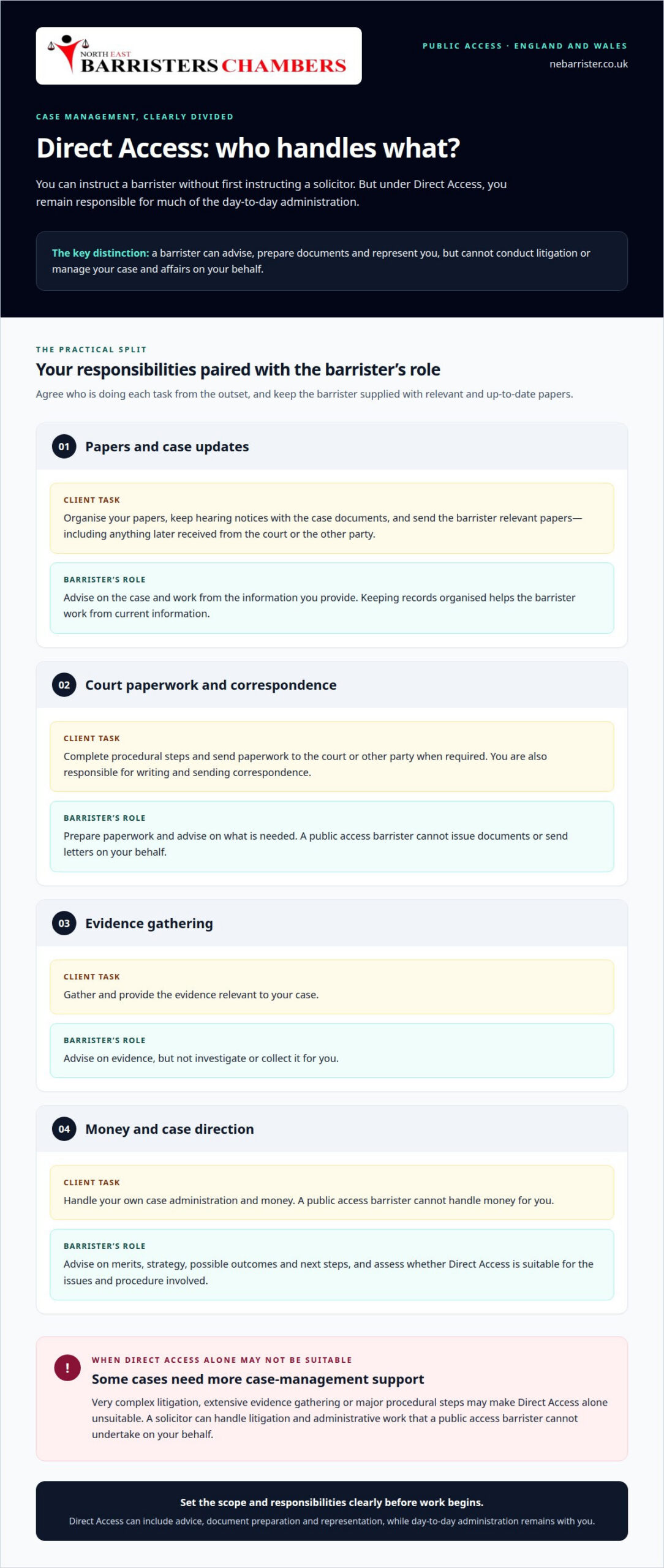
Under the Public Access scheme in England and Wales, the client handles case administration that a solicitor would usually manage. A barrister can advise on merits and strategy, but cannot conduct litigation or manage your case and affairs on your behalf. You remain responsible for organising papers, writing letters and completing procedural tasks.
For example, after receiving a hearing notice, you must keep it with the case papers and take any required administrative steps. A barrister can prepare paperwork, but you may need to send it to the court or other party. You must also send the barrister relevant documents and provide copies of further papers received from the court or opposing party. Keeping records organised helps the barrister work from the current information.
Early advice can help you understand the case’s merits, possible outcomes and next steps. A barrister can assess whether direct access is suitable for the issues and procedural work involved. A case involving very complex litigation, extensive evidence gathering or major procedural steps may not be suitable for Direct Access alone. In those circumstances, the barrister may advise you to use a solicitor instead.
Evidence gathering remains your responsibility: a public access barrister can advise on evidence but cannot investigate or collect it. They also cannot handle money for you or send correspondence to the other party. Before a barrister accepts an instruction, the work must be appropriate for direct access and in your best interests and the interests of justice. Chambers can explain the scope of work and practical responsibilities. If you need advice about case-management support, please contact Direct Access Barrister Services to discuss the work involved.
Fixed-fee estimates and payment in advance
Ask for a fee quote that clearly identifies the work covered. The fee depends on the case and the requested work, such as reviewing documents, advising on a regulatory issue or representing you at a hearing. Case preparation, drafting documents and other work beyond the stated hearing fee may be charged separately.
Before agreeing to an instruction, ask what the proposed fee covers and what is excluded. The terms of business should set out the agreed services, fees and any expenses payable separately. Review the written scope carefully before signing, especially if you need preparation as well as representation.
Payment timing is also part of the agreed terms. The letter of instruction can explain when fees are charged, so you can understand whether payment is due before work begins or at another agreed stage. Don’t assume every instruction requires payment in advance; read the payment terms alongside the scope and any stated disbursements.
A focused instruction can help define the work you need. For example, you could seek advice on a regulatory issue before deciding whether to proceed with further preparation or court representation. Direct instruction avoids the need for a solicitor intermediary, but it does not guarantee a lower overall cost. Additional preparation or a change in scope may require further work and fees.
To obtain a quote, provide a clear summary of the issue, relevant dates and available documents. The clerking team can discuss the case, identify a suitable barrister and explain fees and when they may be charged. A specialist’s experience and the nature of the requested advice or representation inform the proposed scope. The Bar Standards Board regulates barristers, but the fee is agreed through the instruction’s terms, not set by the Board.
Barrister services in criminal and regulatory proceedings
A barrister may advise, prepare documents and represent clients in criminal or regulatory proceedings. The work can focus on a specific issue or hearing.
Barrister Services in Proceedings
A direct access barrister for regulatory proceedings can advise on your case, prepare formal documents and represent you at a hearing. For example, the work may include drafting an appeal form, preparing correspondence or statements, and advising on evidence. A barrister can also advise on suitable experts and instructions for expert witnesses.
In criminal proceedings, an instruction might cover legal advice or advocacy at a court hearing. Agreeing the specific task helps clarify what the barrister will undertake and what administrative steps remain yours. A focused instruction can address one stage without covering every part of the case.
Deadlines, Disclosure and Procedure
Deadlines and disclosure requirements depend on the regulator and the procedure governing the case. There is no single timetable for every UK professional regulatory proceeding. Read the regulator’s directions for relevant dates and documents, then organise the material needed for each response. For healthcare providers navigating regulatory scrutiny, specialist support from CQC Consultancy can assist in preparing documentation and demonstrating compliance alongside legal advice.
A barrister can advise on evidence and prepare formal documents, but cannot conduct litigation on your behalf. You remain responsible for sending documents and correspondence where required. Provide the barrister with relevant papers and updates, so their advice reflects the current procedural position.
Tribunals and Hearings
Public access barristers can represent clients in court, at tribunals, appeal hearings and committee hearings. The appropriate forum depends on the proceeding. A direct access barrister for regulatory proceedings may present your case, address evidence and make submissions at the relevant hearing.
Before accepting access instructions, the barrister considers whether direct instruction is in your best interests and the interests of justice. If legal aid is arranged through a solicitor, the instruction must be made through that solicitor. For advice about representation at a regulatory hearing, discuss your proceedings.
North East Barristers Chambers: Direct Access Barrister Services
North East Barristers Chambers provides Direct Access Barrister Services for people who need legal advice or representation without a solicitor intermediary. This can be a practical next step if you need a barrister to assess a regulatory matter, advise on documents or represent you at a hearing. The Chambers also handles criminal and civil law matters, depending on the work required.
Direct Access is most useful when you can identify the legal task you need help with and are ready to manage the administrative steps agreed as yours. If you need advocacy, court representation may be relevant; if you need advice first, a focused instruction can address the issues and possible next steps.
To discuss your situation, contact North East Barristers Chambers.
Decide on the right next step
A regulatory matter can involve decisions that affect your work and professional standing. Before taking action, consider the specific help you need: an assessment of your position, advice on a hearing, or representation. If the case requires extensive litigation or evidence gathering, the practical demands of managing it directly also matter.
North East Barristers Chambers provides Direct Access Barrister Services, Court Representation and criminal law assistance. If you need a direct access barrister for regulatory proceedings, a conversation about the issue and the work involved can help you identify a useful next step. You can explain where the matter stands and what support you are seeking.
Contact North East Barristers Chambers to discuss your case. Taking that first step can help you approach the process with a clearer plan.
Frequently Asked Questions
What is the Public Access Scheme?
The Public Access Scheme lets members of the public instruct a barrister directly in England and Wales. For example, you could seek an opinion on a regulator’s decision without asking the barrister to take on later hearings. Direct instruction depends on the barrister considering the work appropriate and in your interests and the interests of justice.
What about legal aid?
Direct Access does not provide legal aid. If you’re eligible for legal aid, you may instruct a barrister directly on a privately funded basis. If a solicitor has arranged your legal aid, the barrister’s instruction must go through that solicitor. Identify how your case is funded before agreeing who will instruct counsel.
What will I get for my money?
You receive the work set out in the agreed terms, not an automatic package covering every stage. For instance, an instruction might cover advice on a particular issue or representation at a specified hearing. Check the scope carefully to understand what is included and whether preparation or expenses are charged separately.
What will I have to do?
Keep your case information organised and pass on new material as it arrives. For example, if a regulator sends a revised notice or hearing document, provide the barrister with a copy promptly. Keep a record of documents you send and when you sent them.
What are the terms of business?
The terms of business record the services agreed and the fee structure for your instruction. Review them before signing and returning the letter. Make sure the written scope matches whether you need advice on a document, preparation for a hearing or representation at that hearing. The terms provide a clear record of the work agreed.
I only have a question, can I just ask for advice?
Yes. You can instruct a barrister for advice on a particular issue without asking them to handle the rest of your case. For example, you might seek advice about the merits of challenging a regulatory decision before deciding your next steps. A focused instruction addresses that question without committing you to further work.