
Going to court can be emotionally difficult, and people may find different parts of the process challenging. The emotional impact of going to court can include anxiety, upset and difficulty concentrating, and it may affect how you take part in proceedings. Practical preparation and appropriate support can help you understand what to expect and explain what you need.
If you’re worried about how you’ll cope, take that concern seriously. Evidence can bring difficult experiences back into focus, and the pressure of a hearing can make it harder to follow information or make decisions. Having a mental health condition does not, by itself, mean you cannot participate or give evidence.
This article explains what psychological support may be available, how distressing evidence can affect you and how mental health may influence participation in court. It also covers practical steps for preparing, communicating support needs and understanding when adjustments may help make taking part more manageable.
Key Takeaways
- Plan support before and after a hearing, and talk through how you may respond if the experience becomes distressing.
- Distressing evidence can bring strong emotions; knowing what to expect may help you prepare for giving or hearing evidence.
- Anxiety, depression and trauma can affect concentration, memory and decision-making, so explain specific barriers to taking part and what support could help.
- Emotional responses to court and family change vary. Recognising what you or your children are experiencing can help you identify when extra support may be useful.
1. Psychological support during and after trials
Support needs vary for witnesses, defendants, claimants and victims. A witness may face questions about painful events; a defendant or claimant may feel pressure about the outcome. Giving evidence can be distressing for victims, but each person’s response depends on their role and circumstances.
Before a hearing, tell your lawyer what you expect to find difficult and how you usually respond to stress. Discuss the experience openly, plan what to do if distress becomes intense and, where practical, arrange to observe a hearing beforehand. If you have a mental health condition, planning can take account of symptom patterns and medication schedules. With your agreement, your lawyer can also liaise with your therapist or caregiver.
To prepare emotionally, identify someone supportive to talk to, note questions for your lawyer and agree on a plan for managing distress. On the day, you generally arrive at court, wait to be called and take part in the hearing when directed. Court staff can offer jurors advice if a trial has upset them, so tell staff if you need help.
For jurors, a planned support trial in 14 Crown Courts in England would allow self-referral for six free counselling sessions and access to a 24/7 helpline. These were planned provisions, not a guarantee of support at every court. The jury-service booklet also advises upset jurors to contact their GP about emotional support options, and says the Samaritans can offer emotional support but not advice.
After court, Support Through Court is a specialist charity supporting people facing civil and family courts without representation. People representing themselves can also organise case papers into a short chronology, issue list and deadline list to reduce pressure. For clinical needs, a GP can discuss emotional support options; a psychologist or social worker may help where a witness’s needs are difficult to assess. In England and Wales, the Equality Act 2010 defines disability by substantial, long-term effects on normal daily activities.
2. Emotional effects of distressing evidence
Distressing evidence can bring painful events back into focus. A witness describing an assault, a family member hearing graphic details or someone reviewing photographs may feel upset, tense or overwhelmed. Details may stay on a person’s mind after court, affecting sleep, concentration or their ability to discuss the case calmly. The emotional impact of going to court can continue after the hearing, although reactions differ from person to person.
Pressure can build before a hearing as well as during it. Waiting to be questioned may leave someone anticipating what they will be asked, while unexpected details can make it harder to follow the next question. Tell your legal representative which topics or evidence may be especially difficult. They can explain what to expect in court and discuss how to respond if distress becomes difficult to manage.
Proceedings vary in length, depending on the issues, evidence and decisions the court needs to address. Delays can prolong uncertainty and make it harder to put the case aside. A brief note of upcoming dates and practical tasks can help you distinguish what needs attention now from what can wait.
During questioning, listen to the whole question before answering, and ask for it to be repeated if you have not understood. If a document or image causes distress, tell your legal representative rather than trying to continue without support. Discussing potential triggers beforehand, such as hearing someone’s account or seeing a particular item of evidence, can help you prepare for the emotional impact of going to court.
After a difficult hearing, choose a practical next step: speak with someone you trust, write down questions for your legal representative, or arrange clinical support if distress persists. For help preparing for court, discuss preparation for a hearing as part of your legal case.
Lawyers can help witnesses plan how to respond if a trial causes significant psychological distress. They should explain that legal proceedings may not produce the outcome a client wants and that decision-makers must work with imperfect evidence. In high-stakes matters internationally, specialist criminal defence firms such as merinoyabogadosasociados.cl in Chile also focus on meticulous preparation to help clients navigate the intense pressures of complex courtroom proceedings.
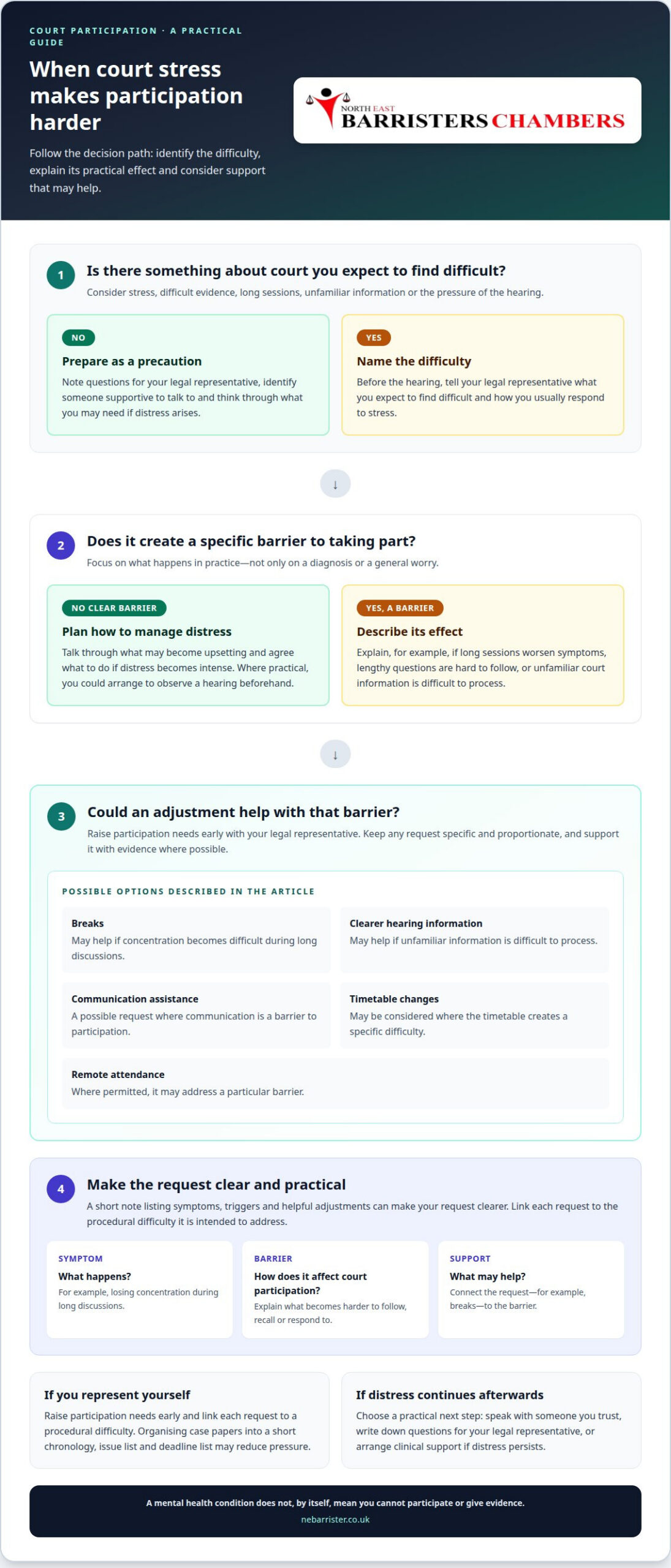
3. How anxiety, depression and trauma can affect participation
Anxiety, depression, trauma responses and stress can affect concentration, memory, sleep, stamina and decision-making. In court, you might lose track of a question, struggle to recall the sequence of events or find a long hearing exhausting. These effects can make participation harder, but they do not automatically mean someone cannot give evidence or follow proceedings.
Court-related stress can disrupt sleep by keeping thoughts about the hearing active at night. Poor sleep can then make it harder to concentrate, remember details and manage emotions during the day. If this happens, note the practical effect, such as difficulty following lengthy questions, and tell your legal representative how it affects your participation.
If anxiety about court becomes overwhelming, promptly explain the difficulty to your legal representative and describe the specific barrier. For example, say that a long session worsens your symptoms or that unfamiliar court information is difficult to process. You might request breaks, clearer hearing information, communication assistance or timetable changes. Keep requests specific and proportionate, and support them with evidence where possible.
If you are representing yourself, raise participation needs early and link each request to a procedural difficulty. A short note listing symptoms, triggers and helpful adjustments can make your request clearer. For example, if you lose concentration during long discussions, explain why breaks may help you follow the evidence and respond. Where permitted, remote attendance may address a particular barrier, but it is not suitable for every hearing.
In England and Wales, the Equality Act 2010 may be relevant if a mental health condition meets the legal definition of disability. This requires a physical or mental impairment with a substantial and long-term adverse effect on normal day-to-day activities. A diagnosis alone does not explain how court participation is affected; practical examples help show the impact, such as missed information, fatigue or difficulty answering questions. Focus on what happens in court and what change could make participation more manageable.
4. What emotional effects can going to court have?
Court can bring fear, anger, sadness, guilt, confusion or grief, particularly when decisions about family relationships are involved. During separation, people may experience several feelings at once, and their moods can change frequently. Someone might feel determined before a hearing, then overwhelmed when discussing arrangements for their children. These responses are personal, and family members may adjust at different paces.
Children can also react to parental separation and related court proceedings. Infants may show changes in eating or sleeping, or become distressed when separated from their main carer. Toddlers may become clingy, cry or change their toileting habits. School-age children may have sleep problems, physical symptoms or difficulties with learning and friendships. These behaviours may signal stress rather than deliberate misbehaviour.
Preschool and older children may worry about what will happen, blame themselves or show anxiety, sadness or changes in behaviour. Teenagers may become withdrawn or less communicative. Parents can help by listening, reassuring children that both parents love them and explaining that the separation is not their fault. Keeping adult conflict away from children also matters, as parental conflict can affect how they adjust.
Managing your own reactions can help you respond steadily to your child’s needs. That does not mean hiding every emotion. Instead, choose an appropriate adult to discuss difficult feelings with rather than asking your child to comfort you or take sides. If your child is not coping, support from a school psychologist or children’s counsellor may help.
Emotional strain can continue outside the courtroom. Social isolation, emotional abuse and physical assaults can have lasting effects on family members, including children. If you are concerned about a child, note specific changes, such as disrupted sleep or withdrawal, and speak with them calmly. If they continue to struggle, consider seeking appropriate support for their needs.
Make space for children to express their emotional needs without asking them to manage adult feelings. Listen to what they say and, if they are not coping, consider support from a school psychologist or children’s counsellor. This keeps the focus on the child’s wellbeing.
North East Barristers Chambers: Court Representation
North East Barristers Chambers provides Court Representation for people who need a barrister to present their case. If anxiety about a hearing is making preparation difficult, clear legal guidance can help you understand the issues, the evidence and what to expect in court. The chambers handles criminal and civil law matters, with Direct Access Barrister Services also available.
Consider legal representation if you need help presenting your position, responding to evidence or understanding the court process. A barrister can focus on the legal issues and courtroom advocacy, while you explain any practical concerns affecting your participation. Legal representation is not psychological or clinical care.
If you would like to discuss Court Representation for your matter, contact North East Barristers Chambers.
Take the next step with a clear plan
Before your next hearing, consider what would make the process easier to manage. You might clarify what will happen, identify questions about the evidence or explain how stress affects your ability to participate. Turning these concerns into specific points gives your legal representative something practical to address.
Recognising the emotional impact of going to court can help you plan without judging your response. You do not need to have every answer before seeking legal guidance. A focused discussion can help you understand your options and prepare for the decisions ahead.
For help with a criminal matter, Direct Access Barrister Services and Court Representation can provide a route to legal support. North East Barristers Chambers can discuss how its criminal law services relate to your case. Legal representation is separate from psychological care, so consider both kinds of support if you need them.
Take the next step when you’re ready. Contact North East Barristers Chambers to discuss your matter and move forward with greater clarity.
Frequently Asked Questions
What emotional support is available before, during and after a UK court hearing?
Support may include legal preparation, practical help at court and clinical care outside the hearing. Beforehand, agree with your legal representative how you will signal that you need a pause or clarification. During the hearing, tell them or court staff if distress is affecting your participation. Afterwards, arrange a check-in with someone you trust and speak to your GP if you need help with ongoing distress.