
What if the most important part of representing yourself in court is what you do before you speak? If you’re searching for how to defend yourself in court UK, uncertainty about procedure, paperwork and answering questions can make a hearing feel daunting. The process varies across the UK and depends on whether your case is criminal, civil or family law.
Preparing carefully can help you present your position clearly, but representing yourself isn’t suitable for every case. You’ll need to understand the directions and deadlines that apply, organise your documents and communicate respectfully in court. The judge may explain how the hearing will run, but you remain responsible for putting your case forward.
This guide sets out practical steps to take before your hearing, what to expect in court and how to respond to questions. It also explains when case-specific advice or representation from a barrister may be appropriate, so you can make a more informed decision about your next step.
Key Takeaways
- Learn what self-representation involves and why the rules depend on your court, case type and UK jurisdiction.
- Use a practical preparation sequence to check hearing details, deadlines, documents and arrangements.
- Understand what criminal, civil and family hearings are generally intended to address.
- Find out how to defend yourself in court UK by listening carefully, answering clearly and following court instructions.
- Consider case-specific advice or representation if your case is complex, the evidence is disputed or the consequences are serious.
Defending Yourself in UK Courts: What It Means
Self-representation means presenting your own case in court rather than relying on a lawyer to present it for you. In England and Wales, a person doing this is commonly called a litigant in person. You remain responsible for understanding what the hearing concerns, preparing relevant documents and explaining your position. The work involved depends on the type of case and the court process.
Representing yourself doesn’t necessarily mean handling every part of the case without support. Depending on the work required and whether direct instruction is suitable, you may be able to get advice on a specific issue or arrange for a barrister to represent you. Before proceeding, ask what the support covers and what you would still need to manage yourself. General information, including this guide, can’t assess the merits of your case, the evidence or the right strategy for you.
Does one set of court rules apply across the UK?
No. England and Wales, Scotland and Northern Ireland have distinct legal systems, and procedures can also differ by court and case type. Don’t assume guidance for one jurisdiction applies elsewhere. Check the notices you’ve received and consult the relevant court or official guidance for the jurisdiction where your case is being heard.
What does representing yourself involve?
In practice, you’ll need to identify what the hearing will deal with, follow the court’s directions, organise your papers and present the points that matter to your case. You’re also responsible for meeting the applicable procedural requirements. A judge may explain how a hearing is run, and court staff can help with administrative matters, but neither should be treated as your legal adviser.
The issues depend on the proceedings. A criminal case concerns an allegation of an offence; a civil case deals with a dispute between parties; family proceedings concern matters such as arrangements or other family-related issues. The steps and rules aren’t interchangeable. If you’re considering how to defend yourself in court UK, first establish which court, jurisdiction and type of hearing apply to your situation. That gives you a practical starting point, but it doesn’t replace tailored legal advice when the stakes or issues call for it.
Preparing to Defend Yourself in Court: A Step-by-Step Plan
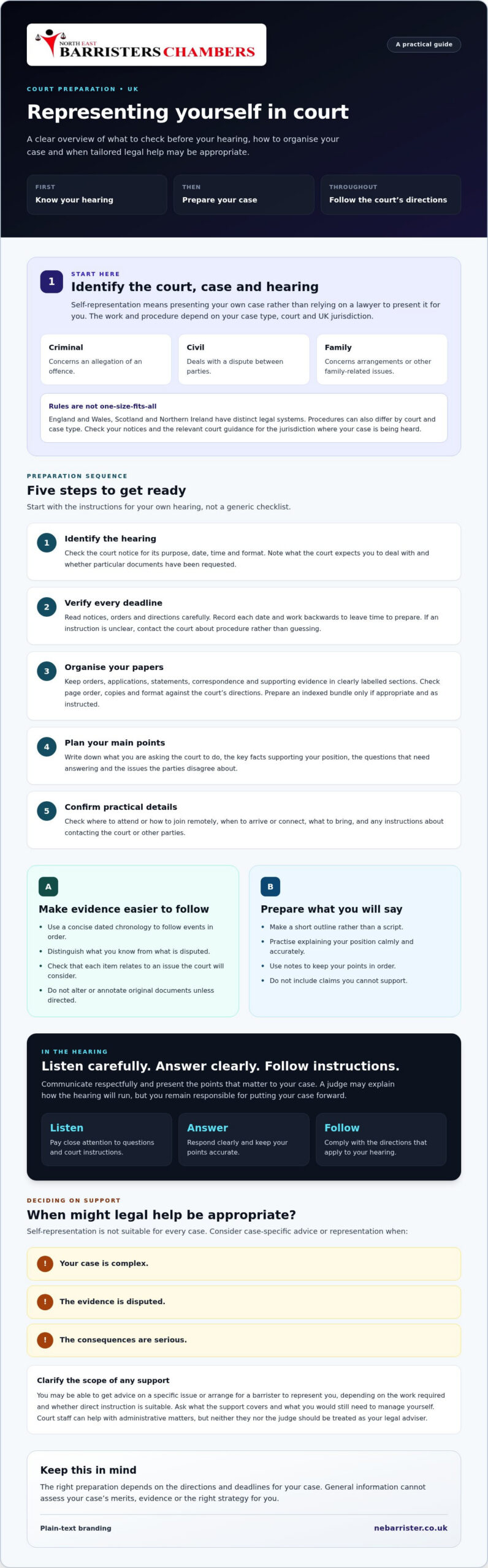
A clear preparation plan can make the process easier to manage. Start with the instructions for your specific hearing, not a generic checklist: court rules and required documents depend on the case and jurisdiction. GOV.UK’s Represent yourself in court guide is a useful starting point, but always follow the directions issued for your own case.
- Identify the hearing. Check the court notice for the hearing’s purpose, date, time and format. Note what the court expects you to deal with and whether it has requested particular documents.
- Verify every deadline. Read all notices, orders and directions carefully. Record each date in a calendar, then work backwards to leave time to prepare. If an instruction is unclear, contact the court about procedure rather than guessing.
- Organise your papers. Keep orders, applications, statements, correspondence and supporting evidence in separate, clearly labelled sections. Check the required page order, copies and format against the court’s directions. Prepare an indexed bundle only if appropriate and in the way the court has instructed.
- Plan your main points. Write down what you’re asking the court to do and the key facts that support your position. List the questions that need answering and the issues the parties disagree about.
- Confirm the practical details. Check where to attend or how to join remotely, when you should arrive or connect, and what you need to bring. Follow any instructions about contacting the court or other parties.
How should you organise evidence and documents?
A dated chronology can help you follow events in order. Keep it concise and distinguish what you know from what is disputed. For example, identify a date supported by a letter and separately note a date another party challenges. Check that each item of evidence relates to an issue the court will consider. Don’t alter or annotate original documents unless directed.
How can you plan what to say?
Prepare a short outline rather than a script. Practise explaining your position calmly and accurately, using your notes to keep your points in order. Don’t include claims you can’t support. If you need help understanding the issues, you can independently check whether legal aid or another support option is available. Where suitable, you may also ask about direct access barrister advice and the scope of work before deciding.
What to expect when defending yourself in criminal, civil or family court
The hearing’s purpose depends on the type of case. A criminal hearing deals with an alleged offence; a civil hearing addresses a claim between parties; and a family hearing deals with a dispute about family matters. The table gives a broad overview, not a prediction of what will happen in your case. Procedures and terminology vary between England and Wales, Scotland and Northern Ireland, so check the relevant official guidance and your court’s directions.
| Proceedings | What the hearing may address | Your role if unrepresented |
|---|---|---|
| Criminal | The alleged offence and the stage of the criminal process. | Understand the charge, the hearing’s purpose and the prosecution’s case. The names used for prosecution and defence roles can vary by jurisdiction. |
| Civil | A claim between parties, including what is disputed and what order is sought. | Explain your position on the claim and respond to the other party’s relevant points and evidence. |
| Family | A dispute about family matters and the issues the court needs to consider. | Help the court understand your position, the relevant evidence and the outcome you seek. |
What is different about defending a criminal case?
If you’re accused of an offence, you’re responding to a prosecution case. Make sure you understand the precise charge and whether the hearing concerns an early procedural step, a decision about evidence or a trial. The legal burden and the practical work of presenting a defence are separate: in criminal proceedings, the prosecution generally carries the legal burden of proving the charge, although exceptions can apply. That doesn’t tell you what evidence to rely on or what decisions to make. If the consequences or procedural choices are serious, seek urgent, case-specific legal advice. A general checklist can’t advise you on plea, evidence or trial strategy.
How do civil and family hearings differ?
In a civil case, one party brings a claim against another. In family proceedings, the dispute concerns a family matter. The relevant issues, evidence and orders sought depend on the individual case, so don’t assume that steps for one kind of hearing apply to another. Check the court’s directions and guidance for the correct jurisdiction. The GOV.UK guide Represent yourself in court is a useful reference, but confirm that its guidance applies to your proceedings. This is an essential part of understanding how to defend yourself in court UK, without treating general information as advice on your case.
How to conduct yourself in court and avoid common mistakes
Clear, respectful communication helps keep the hearing focused on the issues. Courtroom customs and forms of address can vary between courts and jurisdictions, so check the hearing notice and any relevant guidance beforehand. If you have access needs, contact the court in advance to ask about arrangements rather than waiting until the hearing day.
What should you do on the day of the hearing?
Check your notice for the arrival time, location or remote attendance details, and the documents you need. Allow time for security and to find the right courtroom, following any arrival instructions from the court. If illness, an access need or a serious delay may affect your attendance, contact the court promptly and follow its directions. Don’t assume that sending a message means the hearing has been postponed.
How should you speak and respond in court?
Address the judge or magistrates using the form of address specified by that court. Speak slowly and stick to relevant facts. Listen to the full question, answer what was asked and pause if you need to gather your thoughts. If you genuinely don’t understand a question, say so and ask for it to be repeated or clarified rather than guessing.
Wait until it’s your turn to speak. Don’t interrupt the judge, the other party or a witness, and don’t argue directly with a witness. If you disagree with something said, make a note and raise it calmly when invited to respond. Avoid claims you can’t support with evidence. If you need to move to another point, ask the court whether you may do so.
These habits won’t determine the outcome, but they can help you communicate your position clearly. Knowing how to defend yourself in court UK also means recognising that courtroom practices differ. Confirm any specific protocol with the court rather than relying on assumptions.
If you’re unsure how to present your case or respond to evidence, consider getting advice tailored to your circumstances. North East Barristers Chambers provides direct access barrister advice and court representation where the case and work are suitable. You can ask about court representation and clarify the scope of support before deciding.
When to seek legal help before defending yourself in court
Representing yourself gives you direct control over how you explain your position, but it also means managing procedure, evidence and preparation. Before deciding, consider whether you understand what the court requires, can meet the deadlines and feel able to deal with the evidence and questions. The answer may depend on the hearing and the consequences at stake.
When might self-representation be especially challenging?
Consider seeking tailored advice if the case involves serious potential consequences, complex or disputed evidence, several legal issues, or a procedure you haven’t dealt with before. For example, civil disputes involving liability and bodily harm often involve technical assessments; whether dealing with a domestic case or coordinating with overseas specialists like a personal injury lawyer Miami for an incident abroad, professional guidance helps protect your position. A missed deadline or procedural error may affect how your case is handled, although the impact depends on the circumstances. If the hearing is imminent or you’re unsure what the next step is, seek advice promptly rather than relying on a general checklist.
In a criminal case, the charge, hearing stage and choices about evidence can have serious implications. General guidance can’t advise you on a plea or trial strategy. For more information on the scope of criminal advocacy, read this criminal law court representation guide. You can also review this UK legal costs guide when considering how to approach legal support and costs.
What can a directly instructed barrister help with?
Depending on the case and agreed scope, a barrister may provide case-specific advice or represent you in court. Direct instruction may be suitable for some work, but it isn’t right for every case or task. Confirm what is included, what you’ll need to handle yourself and whether any part of the work requires a solicitor or other support. North East Barristers Chambers provides direct access barrister services and court representation in criminal, civil and family matters where the case and work are suitable.
If you’re weighing up how to defend yourself in court UK, ask North East Barristers Chambers whether direct instruction is suitable for your matter and clarify the proposed scope before deciding. The chambers doesn’t provide solicitor services or legal aid, so check independently if you need either.
Take your next step with a clear plan
Knowing how to defend yourself in court UK starts with understanding the hearing in front of you. Court procedures differ across the UK, so check the instructions and deadlines for your specific case. Organise your documents, plan the points you need to make and communicate calmly and respectfully at the hearing.
Self-representation can give you control over how you present your position, but it also means taking responsibility for procedure, evidence and preparation. If the case is complex, the consequences are serious or you’re unsure what to do next, case-specific advice can help you assess your options. The right support depends on your circumstances and the work required.
North East Barristers Chambers provides direct access advice and court representation for individuals and businesses in criminal, civil and family matters across the UK, where the case and work are suitable. Ask whether direct access support is suitable for your case and clarify the scope before deciding. With a clear understanding of your next steps, you can approach the process with greater confidence.
Frequently Asked Questions
Can I defend myself in court in the UK?
Yes, you may be able to represent yourself, but the rules depend on the case and where it’s heard. England and Wales, Scotland and Northern Ireland have different legal systems and procedures. Check the relevant court’s official guidance and read all directions carefully. If the possible consequences are serious or the procedure is unfamiliar, consider getting case-specific legal advice before deciding how to proceed.
Do I need a solicitor or barrister to go to court?
Not everyone is required to have a lawyer, but whether self-representation is sensible depends on your case, hearing and applicable rules. A solicitor or barrister may help with advice, preparation or court representation. It is also worth remembering that different legal professionals handle different types of work; while court disputes require contentious litigation guidance, everyday property transactions are managed by conveyancing specialists such as Triangle Legal Services Limited. Some work may require a solicitor, so don’t assume direct access covers every task. Before instructing a barrister directly, confirm that your matter is suitable and agree what work is included.
How do I prepare to represent myself in court?
Start by checking your hearing notice, court directions and deadlines. Organise relevant documents and evidence, prepare a clear chronology, and write down the issues and outcome you’re asking for. Confirm where and when to attend, or how to join remotely, and practise explaining your points calmly. Procedures differ across the UK, so check official guidance for the jurisdiction and court handling your case.
Can a barrister help me if I do not have a solicitor?
In some cases, you may be able to instruct a barrister directly for advice or court representation. The work they can undertake depends on your case, applicable professional rules and the agreed scope. Ask whether your matter is suitable, what preparation and advocacy are included, and whether any tasks require a solicitor. Clarifying these points beforehand helps you understand what you’ll need to manage yourself.
What should I say when I represent myself in court?
Explain your position clearly, focus on relevant facts and answer the question asked. Listen without interrupting, and avoid making claims you can’t support. If you don’t understand a question or direction, say so and ask for clarification rather than guessing. Forms of address and courtroom procedure can vary, so check the court’s guidance beforehand and follow instructions from the judge and court staff.
What happens if I cannot afford legal representation?
Check independently whether you may qualify for legal aid or another form of support. Availability depends on your case and jurisdiction, and North East Barristers Chambers doesn’t provide legal aid. You can ask a legal professional what advice or representation may involve and clarify the scope and fees before deciding. Don’t assume that a particular funding option is available until you’ve confirmed the relevant criteria.
Is it risky to defend yourself in court?
It can be challenging because you may need to understand procedure, organise evidence and present your case while following court directions. The difficulty depends on the issues and possible consequences. A general guide can’t assess the risks or merits of your individual case. If evidence is disputed, the case is complex or the outcome could have serious effects, consider seeking prompt, independent legal advice.